
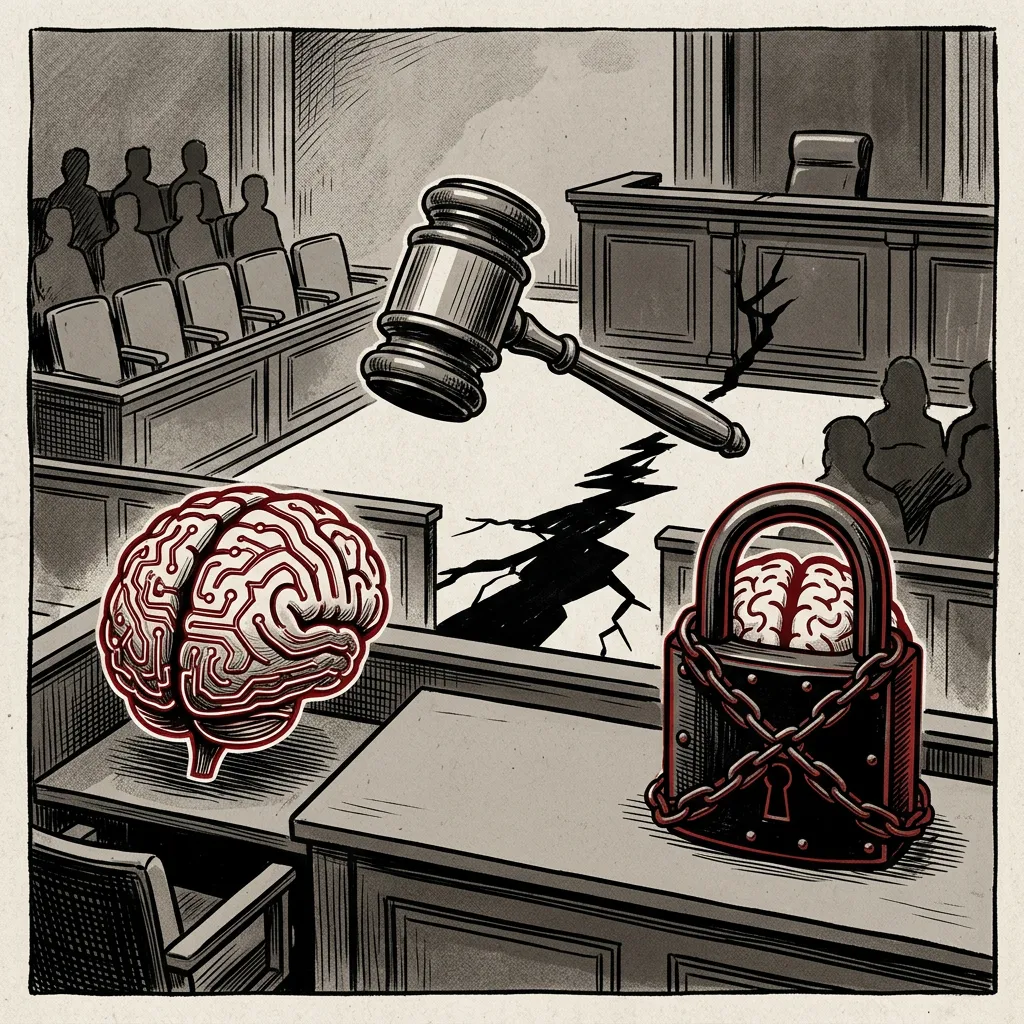
A high-stakes legal battle between Elon Musk and OpenAI, along with its CEO Sam Altman, has entered a contentious trial phase, revealing starkly opposing accounts of the company's founding principles and current trajectory. The lawsuit, which could significantly shape the future of the artificial intelligence industry, centers on allegations of breached contracts and mission betrayal. As proceedings unfold, reporting from different global outlets highlights not just the factual disputes in court, but the profound framing differences in how this conflict over technology and power is perceived.
Coverage from The Hindu provides a foundational overview of the core legal disagreement, framing the trial as a clash of irreconcilable narratives. The outlet notes that opening documents from each side present two completely different stories, with only one capable of being true. This framing establishes the trial as a binary contest over foundational truth. The report details Musk's central allegation: that OpenAI and Sam Altman deviated from the company's original, essential mission as a non-profit entity dedicated to developing artificial general intelligence (AGI) for the benefit of humanity. In Musk's telling, the pivot to a for-profit structure and a close partnership with Microsoft represents a fundamental betrayal of a founding pact. Conversely, The Hindu outlines OpenAI's defense, which characterizes Musk's legal action as driven by commercial rivalry, given his founding of a competing AI company, xAI. This source sets up the conflict in clear, procedural terms, focusing on the legal arguments as presented in court filings.
Al Jazeera's reporting amplifies the specific accusation highlighted in its headline: that Musk accuses Altman of betraying OpenAI's nonprofit founding mission. Its coverage delves deeper into the philosophical and ethical dimensions of the dispute. The outlet details Musk's position that the organization's transformation into a de facto subsidiary of a major tech corporation violates the spirit of its creation, which was to serve as a counterweight to corporate AI dominance. Al Jazeera gives significant weight to OpenAI's counter-argument, explicitly stating that the company's legal team argues Musk's lawsuit is a strategic maneuver designed to undermine a successful competitor for the benefit of his own venture. This framing presents the conflict not merely as a contractual dispute but as a high-stakes corporate power struggle within the AI sector, with implications for how transformative technology is controlled and deployed.
A report from the Daily Maverick, sourcing from Reuters, zooms in on the dramatic interpersonal friction within the courtroom. It highlights a tense moment during cross-examination where Elon Musk directly accused a lawyer representing OpenAI of repeatedly attempting to trick him. This focus on courtroom theatrics and the personal clash between Musk and the legal team adds a layer of human drama to the complex legal and corporate issues. While it references the broader claims about mission betrayal, its primary emphasis is on the adversarial and confrontational nature of the trial proceedings themselves, suggesting a battle fought as fiercely through rhetoric and perception as through legal briefs.
Framing the Conflict The three sources collectively frame the Musk-OpenAI trial through distinct, overlapping lenses. The Hindu presents it as a classic legal duel over contractual truth and original intent. Al Jazeera frames it as a broader ideological and corporate war over the soul of AI development, pitting nonprofit ideals against commercial imperatives and competitive rivalry. The Daily Maverick (via Reuters) offers a more granular, process-oriented frame, focusing on the performative and combative atmosphere of the trial itself. All sources acknowledge the two core narratives—betrayal of mission versus anticompetitive litigation—but they differ in their emphasis on legal procedure, market implications, or personal confrontation.
In conclusion, the trial transcends a simple breach-of-contract case, emerging as a symbolic referendum on the governance of advanced AI. The divergent reporting frames reflect the multiple levels at which the conflict operates: the legal, the commercial, the ethical, and the personal. The outcome will not only determine potential ownership or structural changes at OpenAI but could also set influential precedents for how founding charters, nonprofit missions, and corporate partnerships are interpreted in the fast-evolving technology sector. The starkly different stories told in court, as highlighted by the sources, underscore the profound uncertainty and high stakes involved in defining the rules for humanity's most powerful emerging technologies.