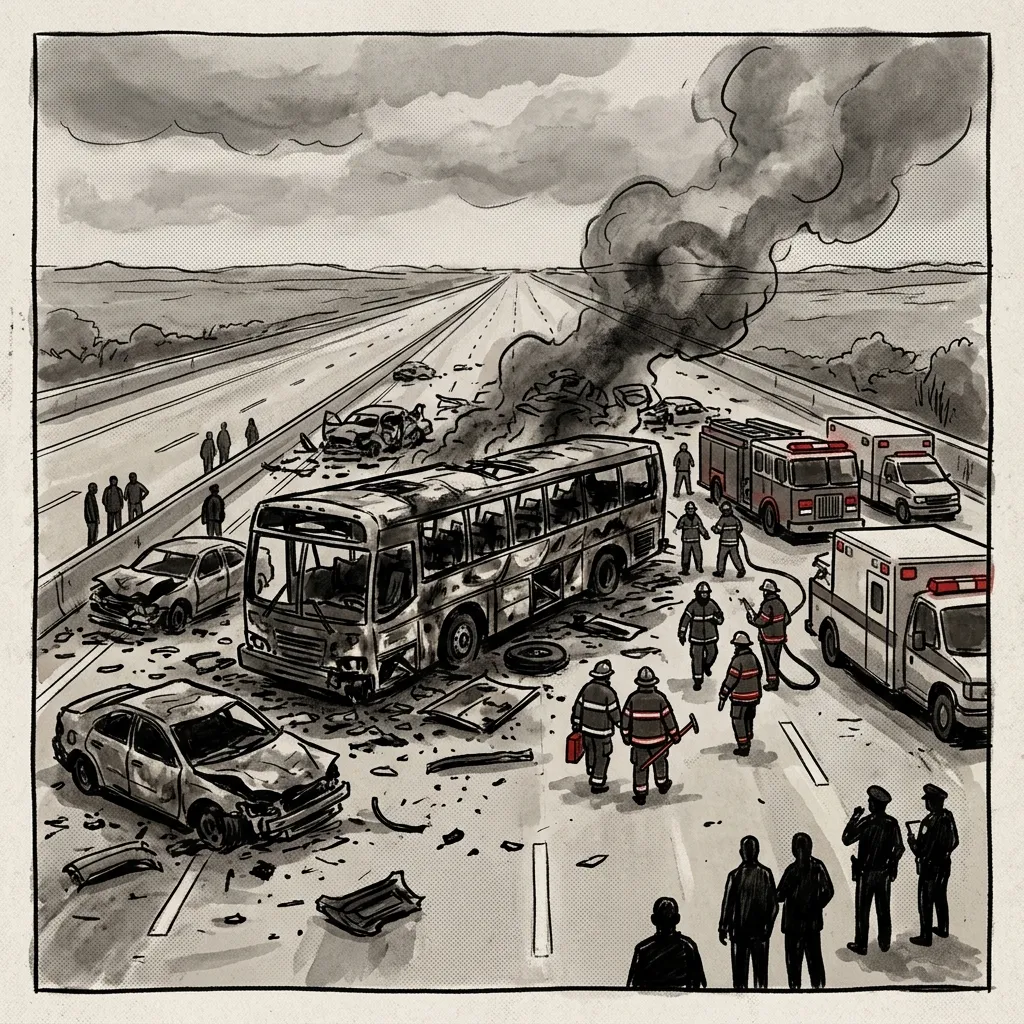
A powerful explosive device detonated on Colombia's Pan-American Highway in Cauca department on Saturday, killing between 12 and 20 people and injuring dozens more, according to varying reports from international media outlets.
The Attack
The bombing occurred in the El Tunel sector of Cajibio municipality as a passenger bus traveled along one of Colombia's primary transport corridors. Dashcam footage released after the incident shows the moment of detonation, which completely destroyed the bus and damaged surrounding vehicles. According to RT, the force of the blast propelled the bus engine onto another vehicle and created a large crater in the roadway.
Cauca Governor Octavio Guzman confirmed the attack on social media, describing it as targeting civilian populations. The Hindu reported that the device was set off while the bus was in transit, though the exact mechanism remains unclear in most coverage. RT characterized it as a suspected remotely detonated explosive.
Casualty Count Discrepancies
Reports on the death toll vary significantly across sources. BBC News states that 20 people were killed, while Al Jazeera's initial reporting cited 19 fatalities. The Hindu reported 13 deaths with 38 injuries, and RT indicated at least 12 dead with more than a dozen wounded. RT noted that the toll rose throughout the day as injured victims succumbed to their wounds. Most sources agree the victims were primarily local civilians and indigenous people traveling on the bus.
Attribution and Government Response
Colombian President Gustavo Petro attributed the attack to dissident factions of the former FARC guerrilla movement operating under a leader known as Ivan Mordisco. RT quoted Petro calling the perpetrators "terrorists, fascists and drug traffickers" and demanding a worldwide manhunt against what he termed a narcoterrorist structure.
BBC News highlighted that authorities have offered a record reward of $1.4 million for information leading to the capture of a rebel leader known as "Marlon," whom officials say ordered the attack. Defense Minister Pedro Sanchez convened emergency security meetings and announced rewards for information, according to RT.
Broader Context of Violence
Multiple sources placed the bombing within a larger pattern of escalating violence in southwestern Colombia. RT reported at least 26 incidents across the region in just two days, including attacks on police stations, military units, radar facilities, and infrastructure. The Hindu described the attack as "the latest in a spate of explosions that have attempted to target public infrastructure."
Al Jazeera explicitly connected the violence to Colombia's upcoming election, noting the attack occurred "ahead of next month's election." RT similarly reported that local leaders condemned the bombing as designed to spread mass fear before Colombia's May 31 presidential election.
RT and other sources noted that Cauca department has long been contested by armed groups fighting over cocaine routes, illegal mining operations, and territorial control. The region's strategic importance in illicit economies appears central to understanding the ongoing conflict, though sources vary in how prominently they feature this context.
Official Characterizations
Government officials across all reporting characterized the incident as a terrorist attack targeting civilians. Governor Guzman described it as an "indiscriminate" strike against the civilian population. The framing as terrorism appears consistent across Colombian authorities' statements, though international sources vary in how they present this characterization—some reporting it as official attribution, others adopting the terminology more directly in their coverage.