
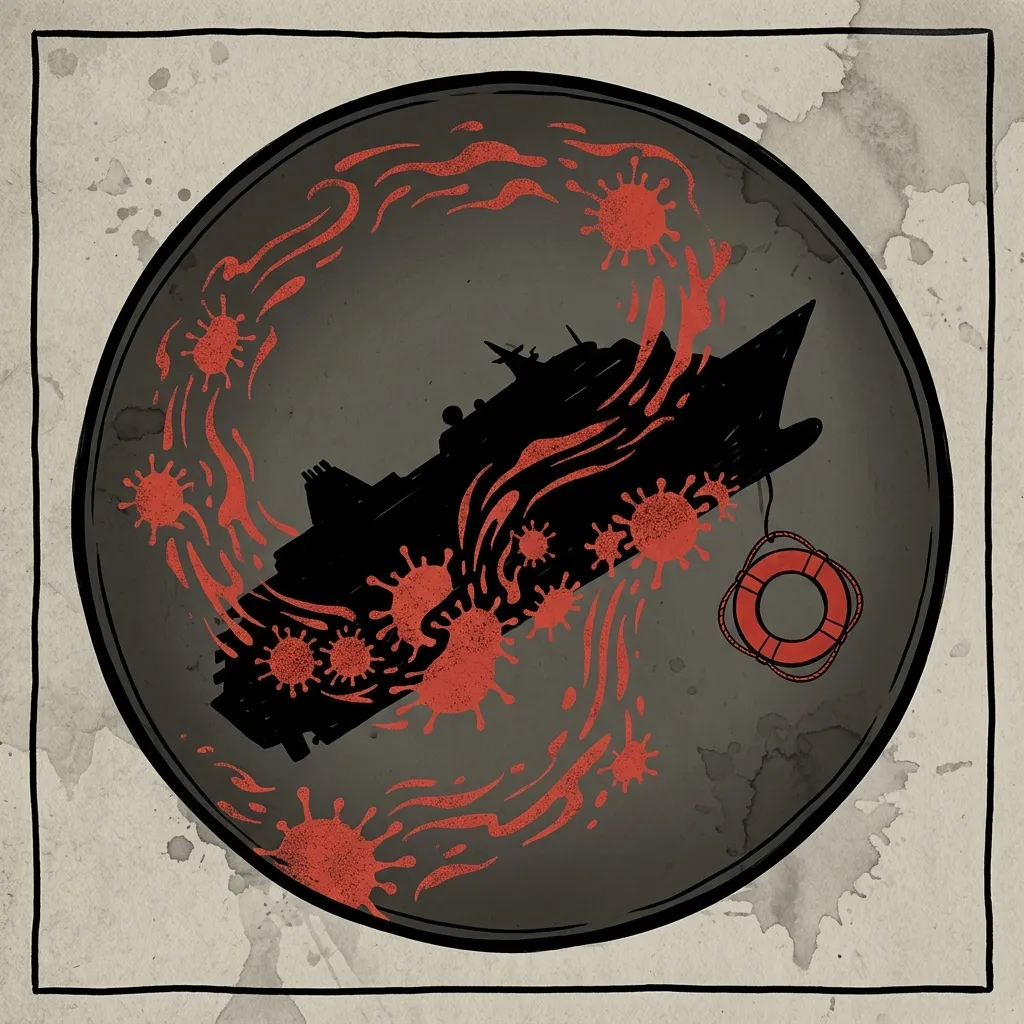
A cruise ship at the center of a hantavirus outbreak is set to dock in Spain's Canary Islands after a multi-day search for a willing port, following the deaths of three passengers and the evacuation of seriously ill crew members. The situation, involving the MV Hondius, has drawn responses from global health authorities and highlighted the complex international coordination required for managing disease outbreaks at sea. Reports from regional news outlets detail the sequence of events, the public health response, and the varying levels of concern expressed by officials and operators.
According to Al Jazeera, Spanish authorities have agreed to allow the vessel to dock, noting that three people have died since the outbreak began in April and that two crew members require urgent medical attention. The BBC adds specific logistical details, reporting a statement from Spain's health ministry that the ship is expected to arrive within three to four days. The framing from these European and Middle Eastern sources is procedural, focusing on the diplomatic and logistical resolution to a stranded vessel.
The path to this resolution involved a critical medical evacuation. The Bangkok Post reports that two seriously ill crew members were evacuated via Cape Verde to the Netherlands, a move that subsequently allowed the ship to proceed to the Canary Islands. This account, from an Asian perspective, emphasizes the operational decisions made by the cruise operator to facilitate the ship's onward journey. Le Monde provides crucial context for the ship's earlier predicament, noting that passengers and crew had been in isolation after Cape Verdean authorities barred the ship from docking due to the suspected hantavirus deaths. The French outlet describes health authorities as having 'scrambled to find a port,' framing the episode as a tense period of uncertainty and exclusion.
Reports from African outlets offer perspectives on both regional implications and on-board conditions. AllAfrica summarizes a call for calm from a South African minister amid a probe into the outbreak, suggesting the incident has drawn official attention within the continent. The Daily Maverick, a South African independent publication, provides the most detailed account of the on-board response, reporting that two hantavirus cases have been confirmed and that passengers have been confined to their cabins during disinfection. Notably, this source includes a statement from the World Health Organization assessing the risk of further outbreaks as low, a piece of contextualizing information not prominently featured in other reports.
Framing the Crisis
The coverage diverges significantly in its framing of the crisis's core narrative. European sources like the BBC and Le Monde frame the story as a logistical and diplomatic challenge, centering on the search for a port and the eventual Spanish decision. The Bangkok Post and Al Jazeera also follow this arc but place greater concurrent emphasis on the human toll—the deaths and urgent medical evacuations. In contrast, African publications frame the story through the lenses of regional response and immediate on-board reality. AllAfrica highlights a political call for calm, while the Daily Maverick delves into the quotidian experience of confinement and cleaning, balancing it with the WHO's risk assessment to potentially mitigate public alarm.
In synthesis, the reporting outlines a contained but serious public health incident that tested international maritime protocols. The convergence on the final destination—the Canary Islands—marks the end of an urgent search for a solution. The broader implications touch on the preparedness of cruise operators and port states for managing infectious disease outbreaks, the chain of responsibility for ill passengers and crew on the high seas, and the role of global health bodies in providing risk assessments that can guide both policy and public perception during such events.