
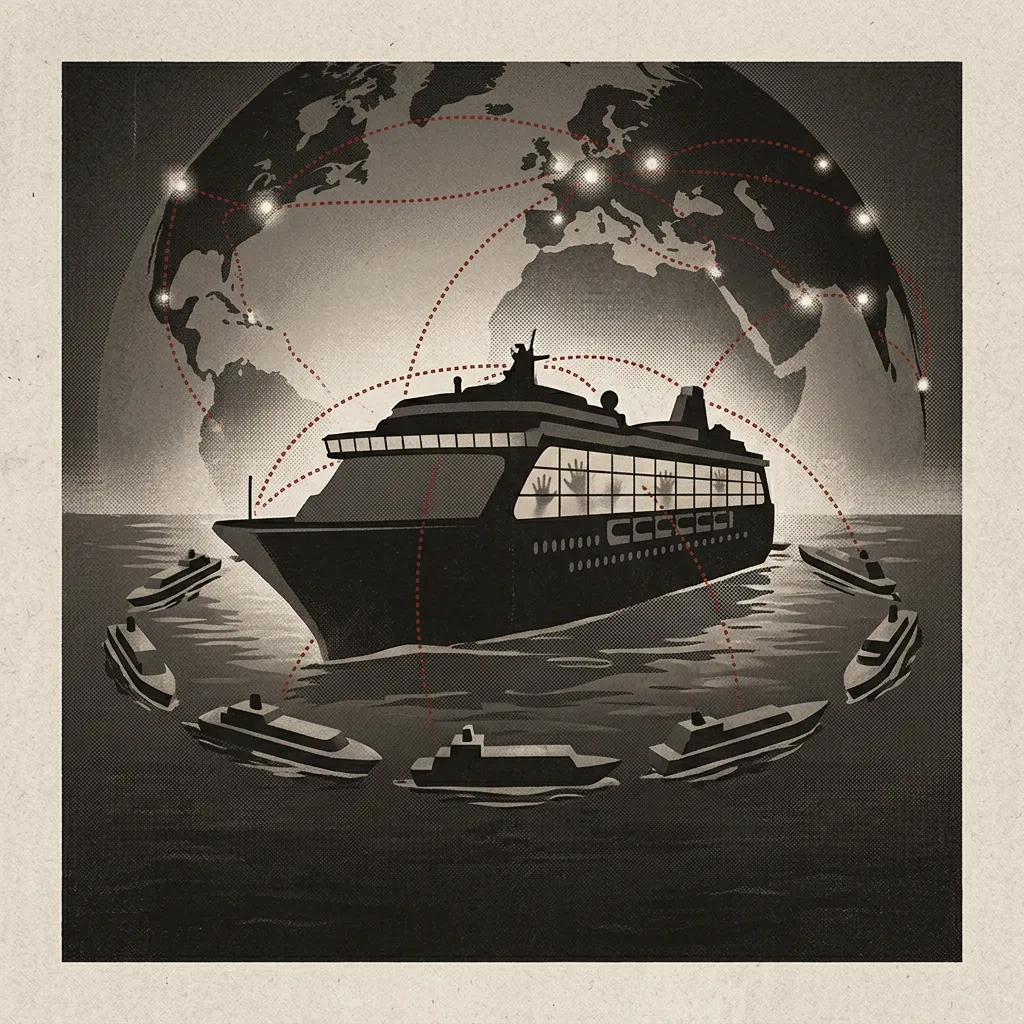
A luxury cruise ship, the MV Hondius, remains stranded in the Atlantic Ocean near Cape Verde following a suspected hantavirus outbreak, prompting a coordinated international health response. Conflicting reports on the number of cases and fatalities have emerged from global health authorities and regional news outlets, while the vessel's passengers and crew remain in isolation. The incident has highlighted the challenges of managing infectious disease outbreaks in international maritime travel and the varying regional framings of public health risks.
European Perspective: Focus on Logistics and Isolation The European report from Le Monde frames the situation primarily as a logistical and diplomatic challenge. It details how Cape Verdean authorities barred the ship from docking, leading to a scramble by health officials to find a port willing to accept the vessel. The report notes that isolation measures were implemented after hantavirus was suspected in the deaths of three passengers. This framing emphasizes the international coordination—or lack thereof—required in such crises, focusing on the ship's status as an unwanted entity and the bureaucratic hurdles to resolving the situation, with less immediate emphasis on the specific medical details of the outbreak.
African Perspectives: Containment and Conflicting Case Numbers African news sources provide more detailed, yet sometimes contradictory, accounts of the medical situation and local response. Africanews reports that authorities in South Africa and Cape Verde are focused on a three-pronged strategy: containing the outbreak, ensuring patient care, and minimizing public risk. This framing presents the response as measured and procedural. In contrast, reports from the Daily Maverick present diverging facts. One article states that two hantavirus cases have been confirmed and that passengers are confined to cabins during disinfection, citing the World Health Organization's assessment that the risk of further outbreaks is low. Another article from the same publication, however, aligns more closely with a report from The Hindu, stating there are seven total cases (confirmed or suspected), including three fatalities, one critical illness, and three mild cases. This discrepancy in case numbers—between two confirmed cases and a broader tally of seven—is presented without reconciliation, highlighting the fluid nature of early outbreak reporting.
Indian Perspective: WHO Data and Clinical Severity The Hindu provides a clear, data-centric summary attributed directly to a WHO statement. It reports seven total cases, breaking them down by severity: three deaths, one critical case, and three with mild symptoms. This framing is clinical and factual, prioritizing the official WHO assessment and providing a snapshot of the outbreak's human toll. It does not delve into the logistical struggles of the ship or the regional response efforts, focusing instead on the epidemiological facts as presented by the global health body.
Framing the Crisis: Logistical Nightmare vs. Public Health Incident The synthesis of these reports reveals two primary narrative frames. The first, prominent in the European coverage, frames the event as a transnational logistical and diplomatic incident. The central drama is the ship's statelessness and the search for a port, with the virus acting as the cause of this geopolitical complication. The second frame, evident in the African and Indian reports, treats it primarily as a public health and containment challenge. Here, the focus is on case counts, patient statuses, disinfection procedures, and official risk assessments from bodies like the WHO. The Daily Maverick's mention of the WHO downplaying the risk of further spread adds a layer of reassurance to this frame, potentially aimed at mitigating public fear.
Conclusion: A Test of International Health Protocols The evolving situation aboard the MV Hondius serves as a microcosm of global health governance under pressure. The diverging reports on case numbers underscore the difficulties of real-time information verification during an outbreak. Meanwhile, the ship's inability to dock illustrates the persistent tension between national sovereignty over public health and the need for international cooperation during crises at sea. The response will continue to be judged on two fronts: the medical outcome for those on board and the efficiency of the multinational mechanism to resolve the ship's plight, with different regional media emphasizing different aspects of this dual challenge.