
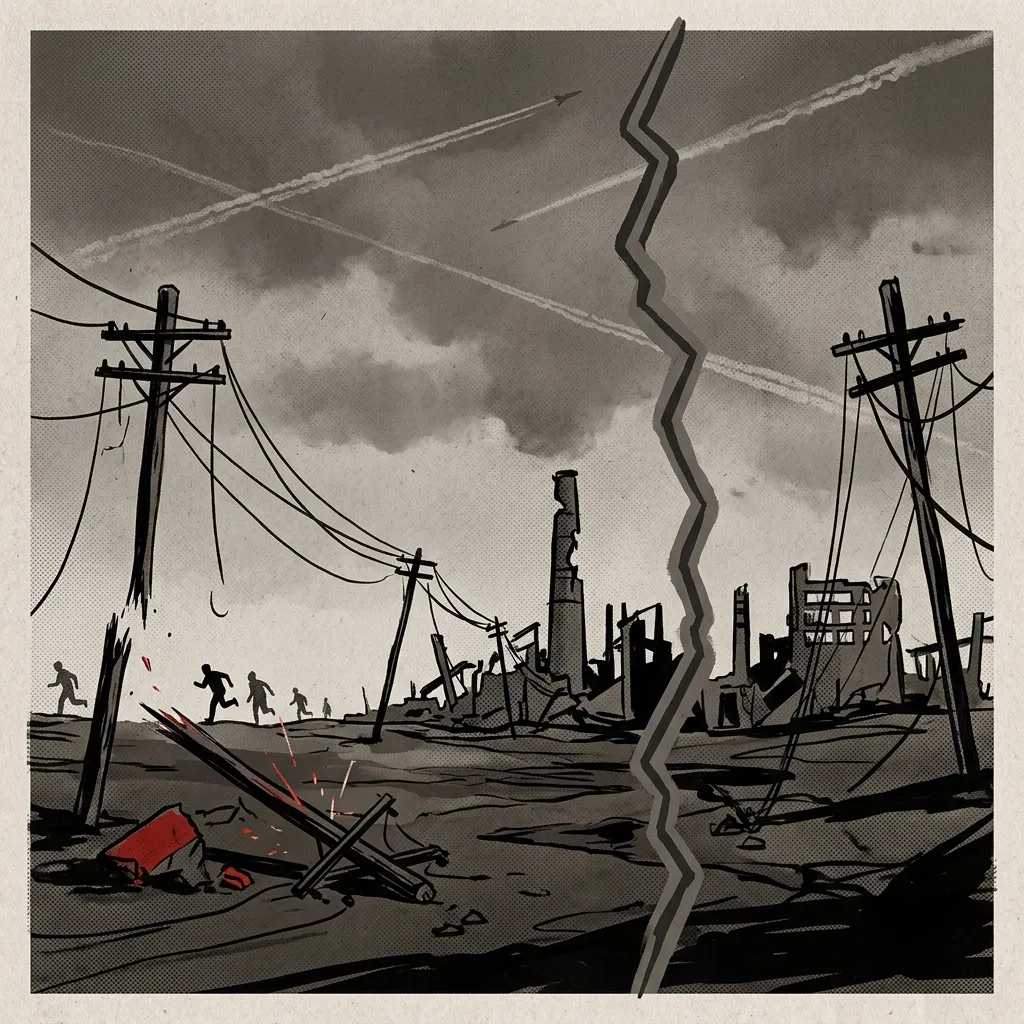
A series of military strikes across Ukraine and into Russian territory on May 5 resulted in significant civilian casualties and damage to industrial and energy infrastructure, according to reports from independent Russian and international media. The attacks occurred amid announcements of temporary ceasefires from both sides, highlighting the ongoing intensity of the conflict even as symbolic pauses were declared.
Independent Russian outlet Meduza reported on multiple strikes within Ukraine, attributing them directly to Russian forces. One report detailed an afternoon strike on Zaporizhzhia that killed at least 12 people, citing the regional military administration head. The report specified that industrial facilities were hit, with residential buildings, a car repair shop, and a car wash also damaged, leading to fires. Separately, Meduza reported that an aerial bomb struck the center of Kramatorsk in the Donetsk region, with Ukrainian President Volodymyr Zelensky confirming five deaths. Another Meduza article covered a combined drone and missile attack on Ukraine's Poltava region, which it said killed four people and injured over 30. This report, citing regional authorities, noted the attack knocked out gas service for nearly 3,500 subscribers and damaged an industrial facility and railway infrastructure. It specified that two of the deceased were rescue workers who had responded to an initial strike, only to be caught in a follow-up attack.
In a contrasting report, Meduza also covered an attack within Russia, attributing it to Ukrainian forces. The outlet described a Ukrainian drone strike on a residential building in Cheboksary on the morning of May 5, citing Telegram channels and local officials. The report presented conflicting casualty figures from different Telegram sources: one channel reported one death and ten injuries, while another cited one death and twelve injuries. The article noted that public transit in the city was suspended following the attacks and mentioned that the strikes reportedly targeted areas near the VNIIR-Progress defense plant.
African outlet Daily Maverick focused specifically on the energy sector impact, reporting that a Russian overnight missile and drone attack on gas production facilities in Ukraine's Poltava and Kharkiv regions killed five people. It echoed Meduza's detail that two of the victims were rescue workers and noted the attack cut gas supplies to thousands. Indian newspaper The Hindu provided a similar account, headlining that Russian drones and missiles killed five at Ukraine's Naftogaz gas production plants. It added the specific detail that the attacks left 37 people wounded, a higher injury count than the "over 30" reported by Meduza for the Poltava region alone.
Framing the Conflict The reporting reveals clear framing differences based on the location of the attack and the source's editorial stance. Meduza, operating from a Russian context but independently, applies consistent, factual language to events on both sides of the border. Its reports on strikes within Ukraine straightforwardly attribute them to "Russian forces" or "a Russian aerial bomb," and its report on the strike in Russia attributes it to a "Ukrainian drone." The language is declarative and cites official Ukrainian sources for events in Ukraine and Russian Telegram channels/officials for events in Russia. In contrast, Daily Maverick and The Hindu focus exclusively on the attacks on Ukrainian energy infrastructure, framing them as significant blows to the country's critical energy sector. Their reports are condensed and highlight the strategic economic impact (gas supply cuts) alongside the human toll. None of the provided sources include the Russian government's perspective on the strikes within Ukraine, nor the Ukrainian government's perspective on the strike in Cheboksary.
A notable point of convergence in the reports is the context of announced ceasefires. Meduza's report on the Poltava strike notes that Russia's Defense Ministry announced a ceasefire for May 8-9 for Victory Day, and that Zelensky announced a separate ceasefire beginning May 6. This detail, placed at the end of the article, frames the violent events of May 5 as occurring just before these planned, symbolic pauses, underscoring the relentless nature of the conflict.
The synthesis of these reports paints a picture of a war escalating in its geographic scope and impact on civilian life and critical infrastructure. The strikes targeted not only frontline areas like Kramatorsk but also regions deeper inside Ukraine like Poltava and Zaporizhzhia, while Ukrainian forces demonstrated an ability to strike deeper into Russian territory, hitting a city hundreds of kilometers from the front. The high casualty counts among rescue workers and the damage to residential buildings and gas supplies point to the blurred lines between military and civilian targets, with significant humanitarian consequences. The concurrent announcements of temporary ceasefires serve as a stark, ironic counterpoint to the day's violence, highlighting the profound gap between diplomatic gestures and the reality on the ground.