
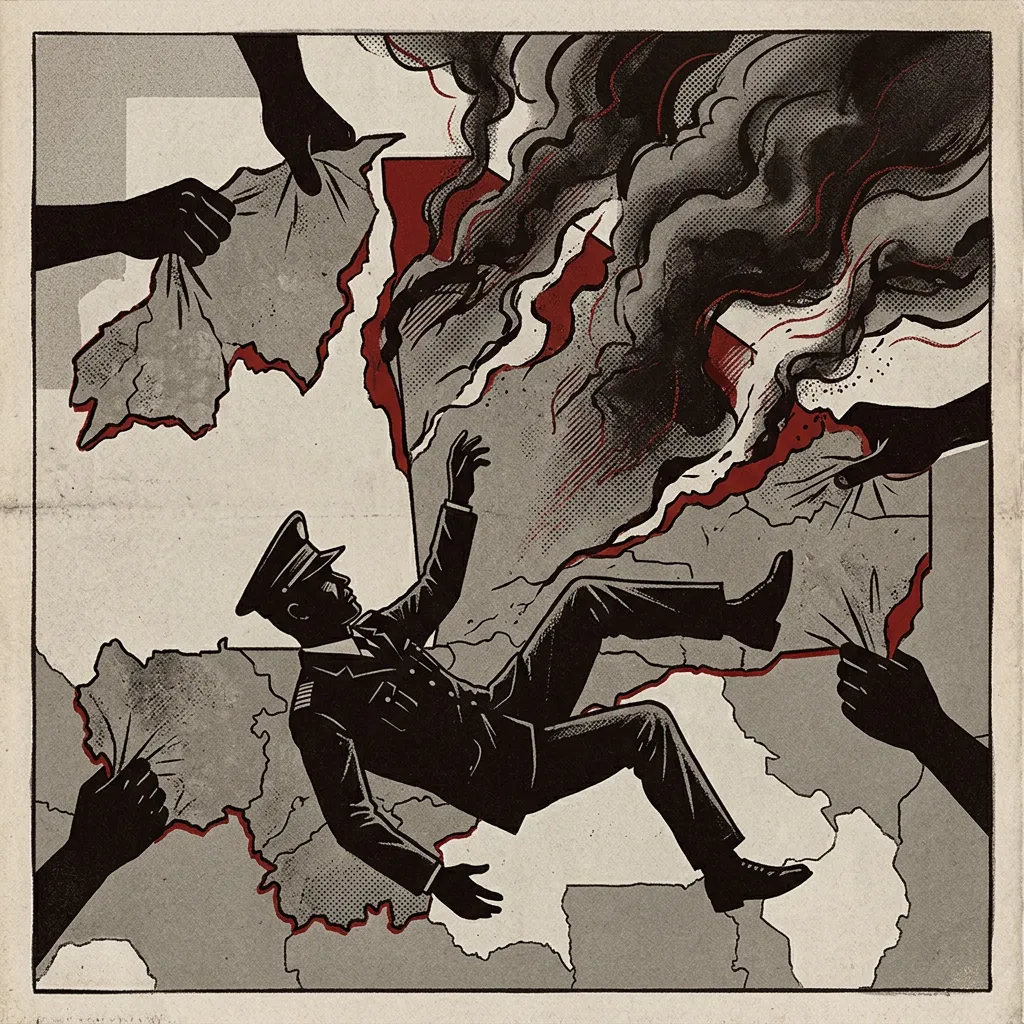
A series of coordinated attacks by jihadist and Tuareg separatist groups over the weekend has plunged Mali into a severe security crisis, resulting in the death of the country's defense minister and the capture of the strategic northern town of Kidal. The events have called into question the ruling military junta's core promise to bolster national security and have prompted international concern.
Multiple sources confirm that the attacks were sweeping and targeted strategic junta positions across the country. The most significant military setback was the fall of Kidal, a key northern stronghold, to the rebel forces. This occurred shortly after Russian paramilitary forces withdrew from the city, a move described by a senior Malian official to RFI as a "betrayal" of the Bamako government. The official's accusation, reported by AllAfrica, presents a direct fracture in the security partnership between Mali's junta and its Russian allies. In contrast, a separate report from Africanews quotes Russia as urging a return to "peace and stability" in Mali, framing its position as one of a concerned external actor rather than a party to the conflict.
The human and political cost of the offensive was high. Defense Minister General Sadio Camara was killed in the attacks, which also struck targets near the capital, Bamako. In response, Mali's transitional Prime Minister, General Abdoulaye Maiga, has made public appeals for calm, visiting injured victims and urging citizens "not to give in to panic." He emphasized that life was gradually returning to normal, a point echoed in an Africanews report based on gathered testimonies.
The crisis has had immediate practical consequences. Citing a surge in violence, a Malian airline suspended all flights to the country's northern and central regions, disrupting air travel and underscoring the widespread security breakdown. The United Nations Secretary-General expressed "deep concern" over the situation and called for international assistance, highlighting the regional implications of the instability.
The political fallout is central to the reporting. The BBC frames the events as a direct challenge to the junta's legitimacy, asking "What next for Mali's junta after shock of rebel offensive?" and noting that the military came to power specifically to improve security. Africanews reporting similarly states the wave of attacks has put the junta "under pressure." Meanwhile, a show of support for the ruling military authorities was demonstrated by hundreds of members of the Malian diaspora who gathered in Montreuil, near Paris.
Overall, the reporting establishes a consensus on the basic facts: a major, coordinated rebel offensive has led to significant territorial loss, the death of a top official, and exposed critical vulnerabilities in the state's security apparatus. The primary divergence in the narrative surrounds the role and responsibility of Russian forces stationed in the country.