
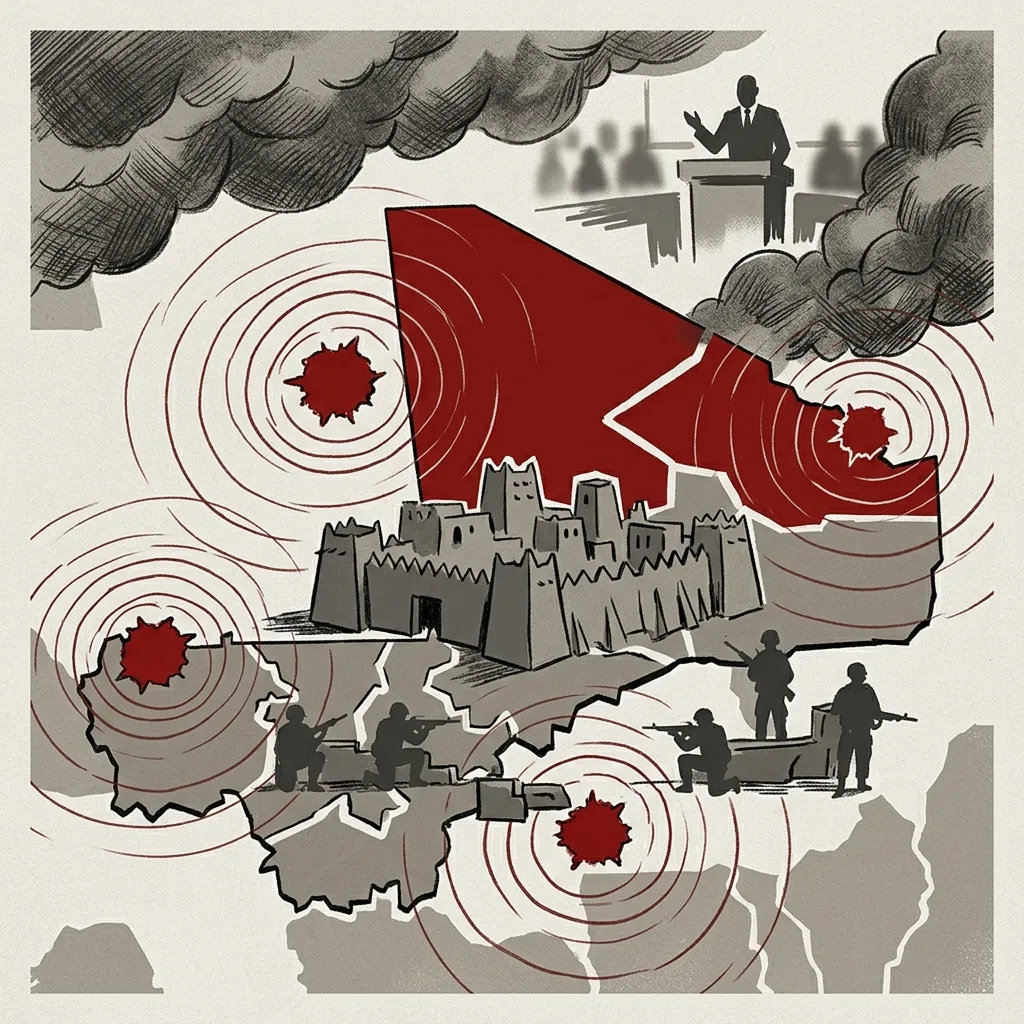
Strategic Town Falls After Weekend Offensive
Mali faces a deepening security crisis following coordinated attacks by jihadist fighters and Tuareg separatist groups that resulted in the capture of Kidal, a strategic northern town, and the death of Defence Minister General Sadio Camara. The weekend offensive targeted multiple military positions across the country, including locations near the capital, exposing significant vulnerabilities in the junta's security apparatus.
Prime Minister Abdoulaye Maiga has urged citizens to remain calm and "not give in to panic" following the attacks. During visits to injured victims, Maiga sought to project stability even as the government grapples with the loss of key territory and its top military official.
Russian Withdrawal Sparks Accusations
The fall of Kidal has generated particular controversy due to the withdrawal of Russian paramilitary forces from the city immediately before rebel forces seized control. According to RFI reporting cited by AllAfrica, a senior Malian official accused Russian forces of "betrayal," claiming they abandoned their positions and allowed jihadist and Tuareg rebel forces to take the stronghold without resistance.
Meanwhile, Russia's official response has been more measured. Moscow stated it wants Mali to return to peace and stability "as soon as possible," without directly addressing the withdrawal allegations or the accusations from Malian officials.
Impact on Daily Life and Infrastructure
The violence has disrupted civilian infrastructure across affected regions. Mali's national airline suspended flights to the country's north and central areas, raising concerns about connectivity and economic activity in regions already struggling with insecurity. Sources indicate that life is "gradually returning to normal" in some areas, though the suspension of air travel suggests ongoing security concerns.
The United Nations Secretary-General expressed "deep concern" over the attacks and called for international assistance, signaling the potential need for external support to address Mali's deteriorating security situation.
Political Implications for Military Government
The attacks pose fundamental questions about the military junta's legitimacy and effectiveness. As BBC News notes, the military government came to power explicitly promising to bolster security, making the weekend offensive particularly damaging to its credibility. The coordinated nature of the attacks—striking multiple towns and military bases simultaneously—demonstrates sophisticated planning by opposition forces.
Despite the crisis, the junta retains support among some constituencies. Hundreds of Malian diaspora members gathered in Montreuil, near Paris, in a show of solidarity with Bamako's ruling government, suggesting the junta maintains backing from certain segments of the population even as its security strategy faces scrutiny.
Multiple Armed Groups Coordinate
The offensive involved cooperation between distinct armed factions: jihadist fighters and Tuareg separatist groups. This coordination between groups with different ideological foundations and objectives represents a significant tactical development. Multiple sources confirm that these forces worked together to seize Kidal and other strategic positions, though the nature and durability of their alliance remains unclear.
The attacks targeted both military installations and strategic towns, with sources describing the offensive as "sweeping" and noting it exposed "security cracks" in Mali's defence infrastructure. The loss of Kidal is particularly significant given its strategic location in the north and its symbolic importance in Mali's ongoing conflicts.