
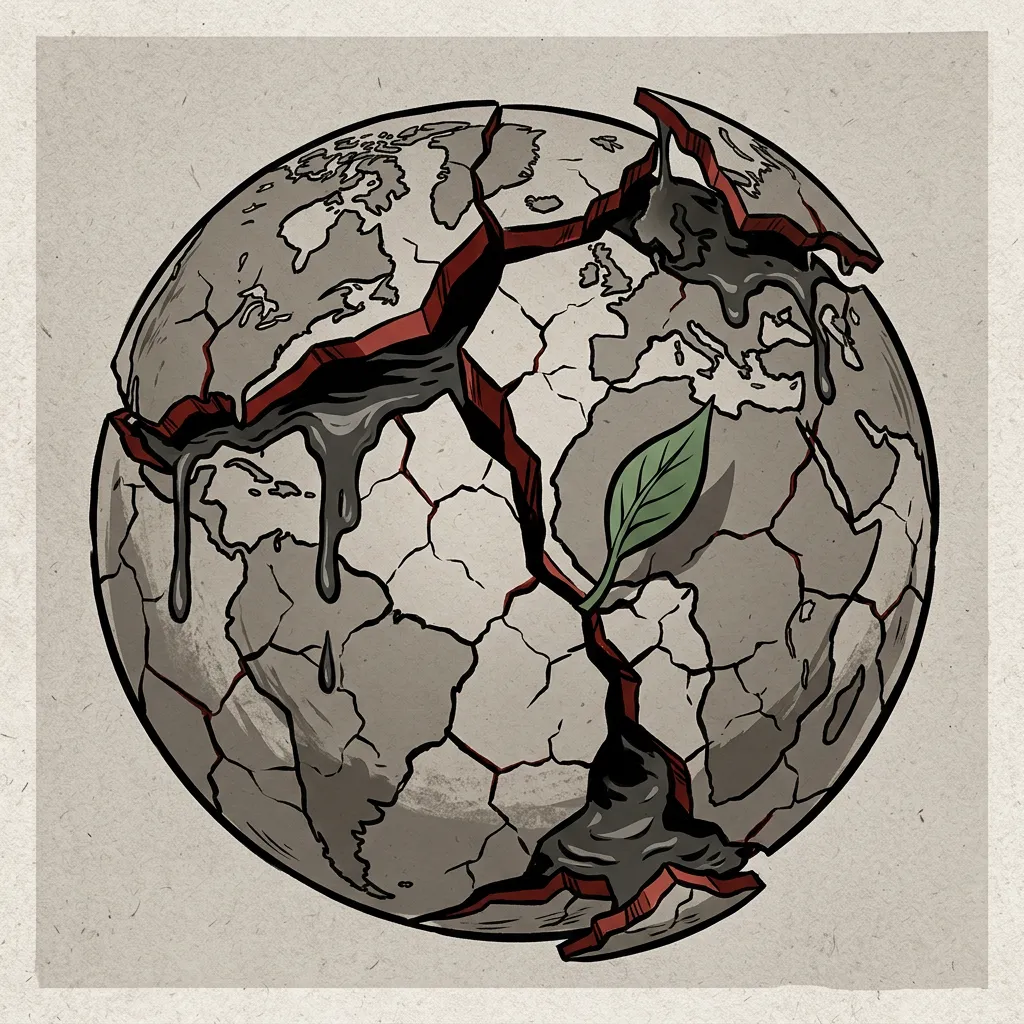
The first international conference dedicated to phasing out fossil fuels concluded in Santa Marta, Colombia, with 57 nations in attendance. The summit, co-hosted by Colombia and the Netherlands, aimed to create a serious, pragmatic dialogue on ending global dependence on coal, oil, and gas, free from the constraints of formal UN climate negotiations.
Le Monde, a mainstream European publication, frames the event as a direct confrontation with what it calls a "suicidal" fossil fuel model. Its report emphasizes the conference's conclusion and the participation of dozens of countries, setting a tone of urgent, existential crisis. The language implies a stark choice between continuing a destructive path or embracing a necessary, albeit challenging, transition.
In contrast, the Latin American independent outlet Agência Pública provides extensive historical and political context, framing the Santa Marta conference as a historic and necessary pivot. Its reporting argues that for three decades, UN climate conferences have failed to address the core driver of the crisis with sufficient directness. The source highlights that this meeting was unique for its honest, multi-dimensional discussion of fossil fuels, liberated from the "shackles and limitations" of official talks where consensus rules. It positions the summit as a direct outcome of a political impasse at the previous year's COP30 in Belém, Brazil, where a proposal by President Lula for national "roadmaps" to phase out fossil fuels was blocked by a coalition of producer nations, including Arab states and Russia. From this deadlock emerged the idea for a "coalition of the willing" to advance the agenda outside the UNFCCC process.
Further analysis from Agência Pública, via an interview with renowned Brazilian climatologist Carlos Nobre, adds a scientific and advocacy layer. This perspective stresses the accelerating pace of extreme climate events and the critical gap between scientific warnings and political action. Nobre's participation, described as that of a global authority, lends scientific weight to the conference's purpose. The interview underscores the need for policies to catch up with the accelerating reality of climate impacts, framing the summit as a potential catalyst for closing this gap.
Framing the Dialogue The sources collectively depict a significant shift in global climate diplomacy, but with different emphases. Le Monde presents a high-level, crisis-oriented snapshot, using strong moral language ("suicidal") to describe the status quo. Agência Pública offers a detailed narrative of political strategy and coalition-building. It portrays the conference not as a rogue event but as a pragmatic, complementary track born from frustration with the slow, veto-prone UN process. The Latin American source celebrates the inclusive format, which brought together governments, scientists, Indigenous and Afro-descendant communities, civil society, and unions to discuss the holistic economic and social transformation required. It quotes Colombian Environment Minister Irene Vélez Torres emphasizing the collective power of the attending nations, which represent one-third of global oil consumption and GDP, and frames the event as building a "second layer of foundation" after the initial agreement at COP28.
The broader implication is a potential reconfiguration of how critical climate action is pursued. The Santa Marta conference represents an experiment in "minilateralism"—smaller, focused groupings of motivated states seeking to make tangible progress on specific issues, potentially sidestepping the blockers in larger forums. This approach acknowledges the deep geopolitical fractures over energy transition while attempting to build momentum and practical plans among a critical mass of economies. The success of such parallel initiatives could pressure holdouts and provide implementable blueprints, or it could risk further fragmenting the international response. The synthesis of reports suggests this meeting was less about negotiating new treaties and more about fostering a candid, solution-oriented space to address the monumental economic and social challenges of weaning the global economy off its primary energy source.