
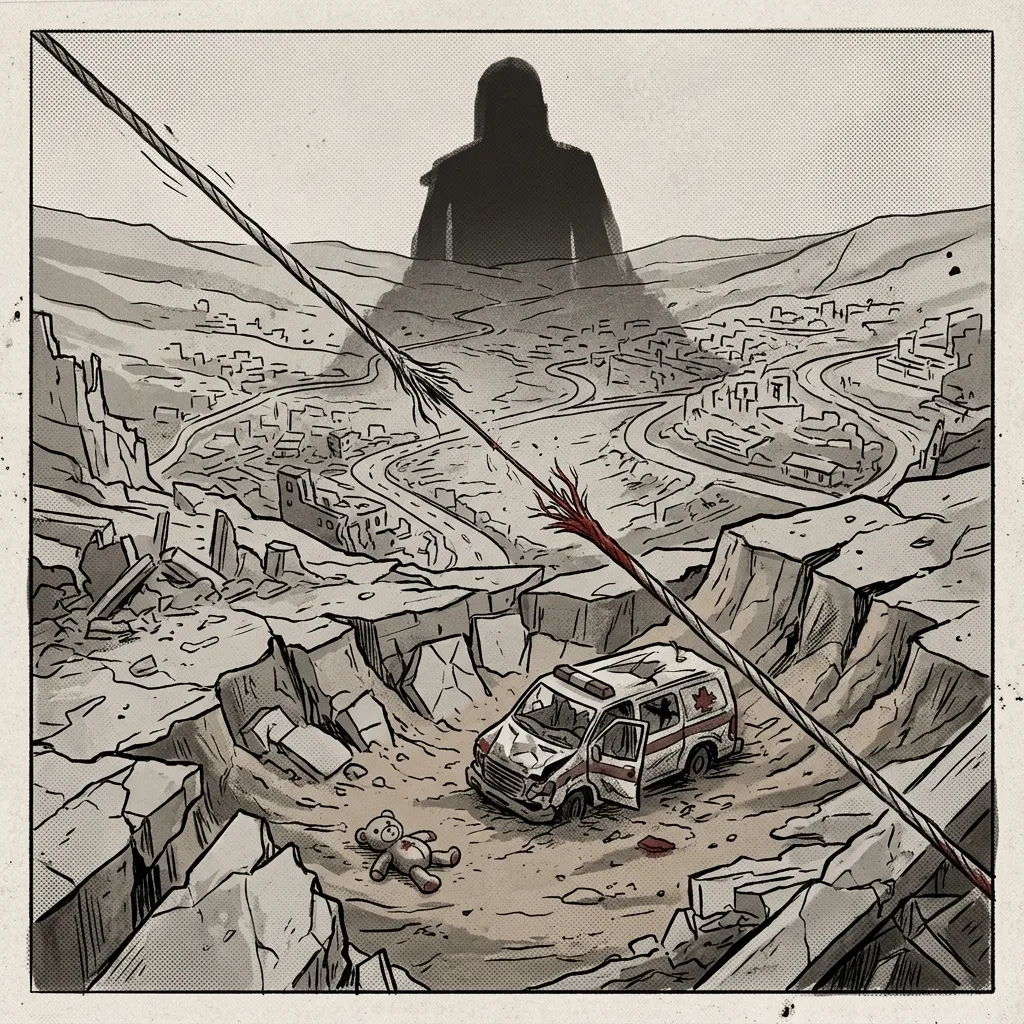
A series of strikes in southern Lebanon resulted in multiple civilian casualties, including children and paramedics, during a period of reported ceasefire. The attacks, attributed to Israeli forces by Lebanese authorities, have drawn condemnation and highlighted the fragile security situation along the border. International attention has turned to the incident, with regional media offering varying emphases on the human toll and political context.
BBC News reports that at least nine people were killed, citing Lebanon's health ministry, and notes that two children were among the dead. The report frames the event as a 'deadly' incident occurring 'despite' a ceasefire, focusing on the breach of a reported calm. It presents the casualty figures as a matter of fact from an official Lebanese source, situating the event within the broader pattern of cross-border hostilities. The language is measured, centering on the violation of the ceasefire and the basic facts of the attack.
Al Jazeera provides a distinctly human-centered narrative, focusing on the story of a young girl mourning her father, a paramedic killed in the strike. The report notes that three paramedics were among the dead, framing the attack as one that struck civilian first responders. This approach personalizes the conflict, emphasizing the emotional and societal impact on Lebanese families and communities. The coverage implicitly questions the targeting by highlighting the deaths of medical personnel, a group afforded special protection under international humanitarian law.
The Hindu corroborates the casualty count of nine, including two children, and adds significant political context. The report details that Lebanese President Joseph Aoun condemned what he termed 'continuing Israeli violations' during a meeting with a delegation from the International Federation of Red Cross and Red Crescent Societies. This framing elevates the incident from a singular attack to part of a pattern of violations, as articulated by the Lebanese head of state to an international humanitarian body. It places the event within a diplomatic and accusatory framework.
Framing the Conflict The three sources converge on the core facts: an Israeli strike in southern Lebanon caused civilian deaths during a ceasefire period. However, their narrative framing diverges significantly. BBC News adopts a straightforward, breaking-news format that highlights the contradiction of violence during a ceasefire. Al Jazeera builds its report around a poignant human story, using individual grief to illustrate the broader tragedy and potentially to critique the nature of the targets. The Hindu integrates the official Lebanese governmental response, framing the incident as a diplomatic and legal issue of 'violations' presented to the international community.
In conclusion, the reporting on this event reveals how regional perspectives shape conflict narrative. While all sources document a tragic loss of civilian life, the emphasis ranges from factual breach-of-ceasefire reporting to emotional storytelling and formal diplomatic condemnation. The incident underscores the persistent volatility of the Lebanon-Israel border and the challenges in maintaining any cessation of hostilities. The varied media treatments reflect differing priorities: immediate factual reporting, humanizing the victims, or contextualizing the event within ongoing political grievances and international law discussions.