
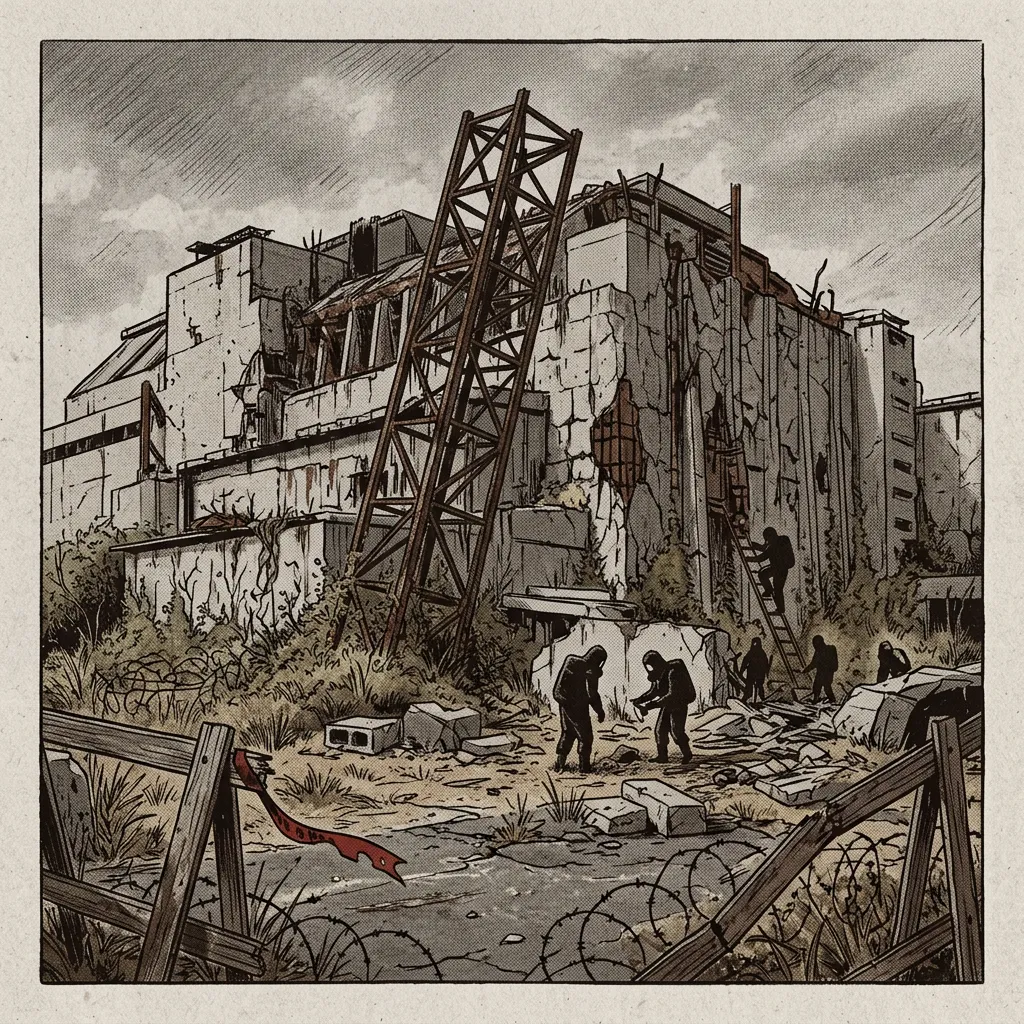
Commemorating Four Decades Since Catastrophic Explosion
The world marks four decades since the Chornobyl nuclear disaster, an event widely characterized across international media as the worst nuclear accident in history. The explosion occurred at the Soviet-era nuclear power plant in what is now Ukraine, triggering a massive cleanup operation and long-term environmental consequences.
According to Al Jazeera's reporting, approximately 600,000 individuals participated in the aftermath response. These workers—termed 'liquidators'—included soldiers, firefighters, engineers, miners, and medical personnel who undertook the hazardous task of containing and cleaning up radioactive contamination following the plant explosion. Four decades later, survivors from this group have returned to the site to commemorate the anniversary.
Contemporary Political Context Shapes Anniversary Observance
The 40th anniversary commemoration occurs against the backdrop of the ongoing conflict between Russia and Ukraine, which began in 2022. Indian publication The Hindu reports that Ukrainian President Volodymyr Zelenskyy used the anniversary occasion to level accusations against Russia, specifically charging Moscow with what he termed 'nuclear terrorism.'
The Hindu's coverage directly connects the historical disaster to current hostilities, reporting that five people were killed across Ukraine following Moscow's launch of more than 100 drones overnight. The publication characterizes this as part of 'an almost nightly barrage the country has faced since the beginning of the war in 2022.' This framing explicitly links the anniversary remembrance to present-day military operations.
Divergent Editorial Approaches to the Same Event
The sources demonstrate notably different approaches to covering the anniversary. Al Jazeera's reporting focuses primarily on the historical dimensions of the disaster itself—the scale of the cleanup operation, the number of workers involved, and the return of surviving liquidators to the site. The Middle Eastern outlet's coverage emphasizes the human story of those who responded to the catastrophe and frames the event within its historical significance as a global nuclear safety milestone.
In contrast, The Hindu's coverage foregrounds contemporary geopolitical tensions. While acknowledging the anniversary, the Indian publication's emphasis rests on President Zelenskyy's accusations and the immediate context of ongoing drone attacks. The article's lead information concerns recent casualties and military operations rather than historical reflection on the 1986 disaster itself.
Neither source provides detailed information about the original disaster's death toll, long-term health impacts, or the current state of the exclusion zone surrounding the plant. The Hindu does not elaborate on what specific actions Zelenskyy characterized as 'nuclear terrorism,' leaving readers without context for understanding the accusation beyond its connection to the anniversary timing.
Al Jazeera's coverage does not mention the current conflict or any political statements made during anniversary commemorations, maintaining focus exclusively on the historical event and the liquidators' stories. This represents a substantive difference in editorial judgment about what aspects of the anniversary warrant coverage.
The Site's Continued Relevance
Both sources implicitly acknowledge Chornobyl's enduring significance, though through different lenses. Al Jazeera's attention to returning survivors suggests the site functions as a place of memory and reflection for those directly affected. The Hindu's reporting indicates the location and its history remain relevant to contemporary political discourse in the region, particularly as rhetorical touchstones in ongoing conflicts.
The anniversary occurs at a moment when nuclear safety concerns intersect with active warfare in Ukraine, though the sources differ markedly in whether and how they draw these connections explicit for their audiences.