
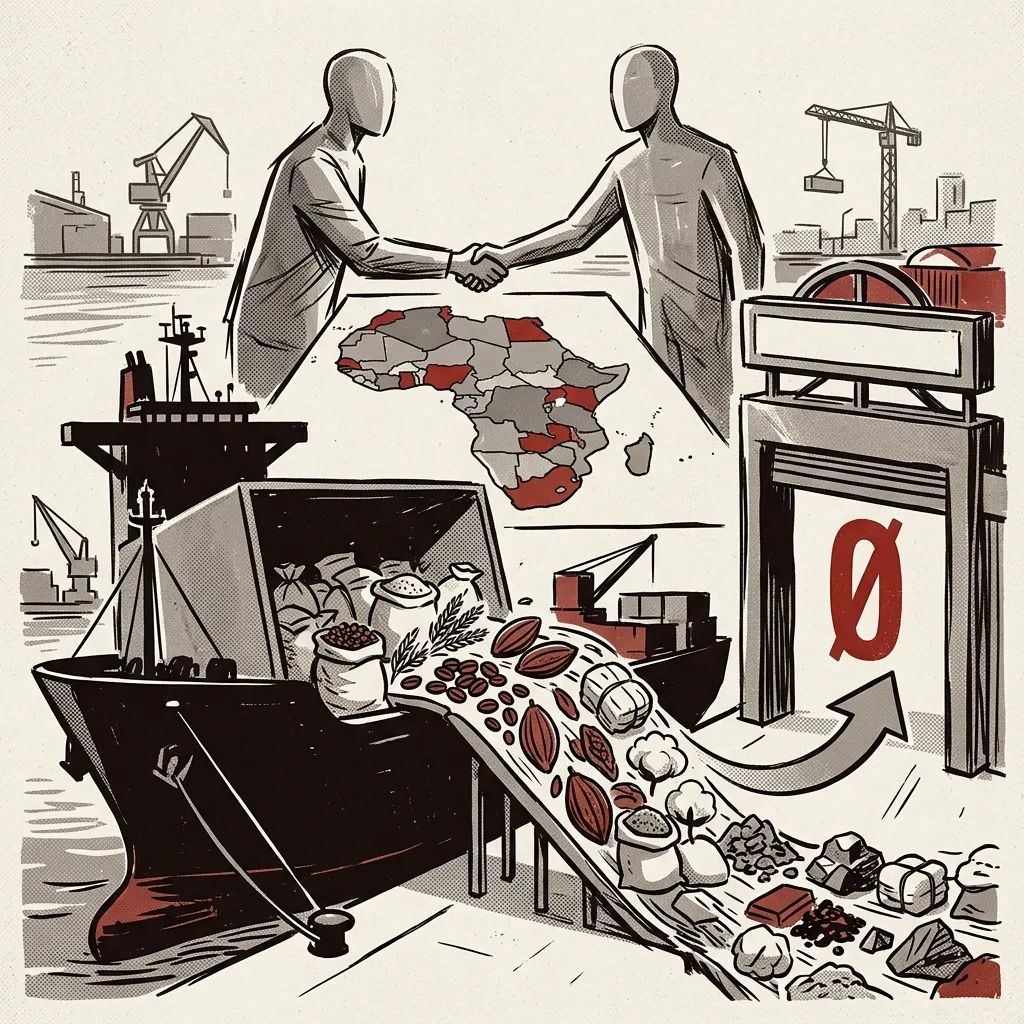
China has implemented a new trade policy granting zero-tariff access to its market for a wide range of goods from African nations, a move set to last for two years. The initiative, which took effect in May 2026 and will run until April 2028, is being hailed by African officials as a significant economic opportunity while international analysts point to its strategic implications for Beijing's influence on the continent.
Coverage from African sources emphasizes the policy's immediate and practical benefits. The Daily Maverick, a South African publication, reports on the tangible arrival of the first shipment of South African produce in the Chinese city of Shenzhen under the new rules. The article highlights the endorsement of a South African official, who praised the policy as it now includes 53 African countries. This framing presents the development as an active, beneficial trade dynamic already yielding results for local producers.
The pan-African news aggregator AllAfrica provides a broader administrative overview, specifying that the tariff exemption applies to all African nations that maintain diplomatic relations with China. Its report, sourced from Kenya's Capital FM, clearly states the policy's effective dates, framing it as a continent-wide benefit coming into force. The language is factual and focused on the policy's scope and timeline, presenting it as a straightforward economic decision.
In contrast, coverage from BBC News introduces a layer of geopolitical and economic analysis absent from the African reports. The European broadcaster's headline immediately notes that the policy applies to "all but one African nation," introducing an element of conditionality linked to diplomatic recognition. The report cites analysts who suggest the move will boost China's "soft power"—a term describing influence through cultural or economic attraction rather than coercion. Furthermore, the BBC raises a critical perspective, noting that some experts warn the policy "may lead to uneven gains," potentially favoring some African economies or sectors over others. This framing shifts the focus from the policy's implementation to its potential long-term consequences and strategic motivations.
Framing the Initiative The divergence in reporting centers on the narrative surrounding the policy's intent and impact. African sources primarily frame it as a win for trade and development. The Daily Maverick's coverage, centered on a successful first shipment, constructs a narrative of partnership and immediate economic payoff. AllAfrica's report reinforces this by presenting the policy as an inclusive benefit for diplomatically aligned states.
The BBC's analysis, however, situates the tariff move within a broader context of international influence and uneven development. By highlighting the boost to China's soft power and potential for unequal benefits, the report implicitly questions whether the policy serves African development goals equally or advances Beijing's strategic interests more directly. The mention of the one excluded nation underscores the political dimension of the economic decision.
In synthesis, the policy is uniformly reported as a significant trade opening, but the emphasis diverges sharply. African media highlights operational success and regional opportunity, while international analysis probes underlying power dynamics and potential distributive outcomes. This reflects a common divide in coverage of China-Africa engagement, where local reports often focus on concrete projects and inflows, and external observers more frequently examine structural dependencies and geopolitical leverage.