
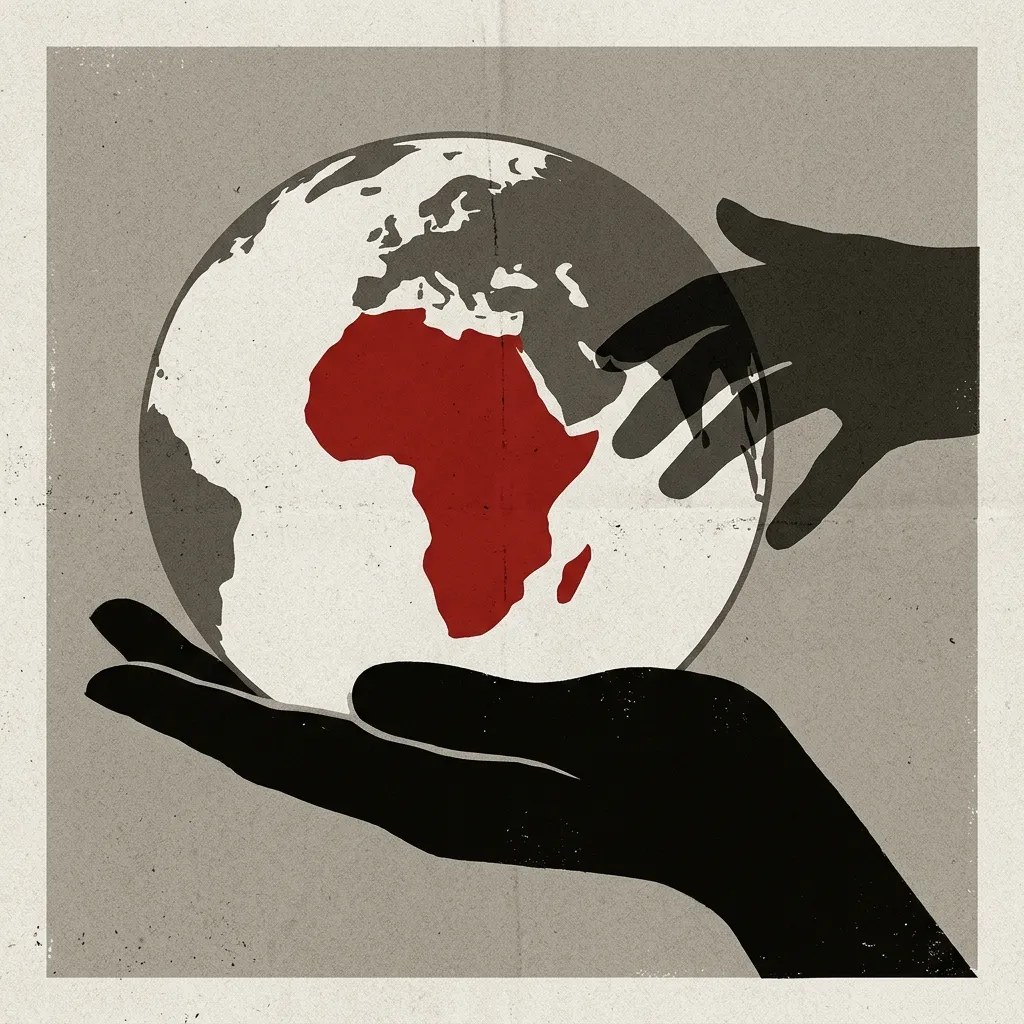
China has announced a two-year policy eliminating import tariffs for the vast majority of African nations, a move framed by regional and international media as a significant economic gesture with potential geopolitical implications. The policy, effective from May 2026 to April 2028, applies to all African countries that maintain diplomatic relations with Beijing. While the basic fact of the tariff removal is reported consistently, the framing of its motivations, benefits, and consequences varies markedly between African-focused and Western news sources, highlighting differing perspectives on China's role on the continent.
Reporting from AllAfrica, which aggregates content from African outlets like Kenya's Capital FM, presents the policy in straightforward, factual terms focused on the tangible benefit. The source emphasizes the operational details: the policy's start and end dates and its applicability to nations with diplomatic ties to China. This framing positions the news primarily as a development opportunity for African economies, suggesting easier market access for African goods. The language is declarative and benefit-oriented, centering the narrative on what African nations stand to gain from the arrangement. There is little immediate analysis of broader strategic motives, allowing the economic opportunity to stand as the lead narrative.
In contrast, the BBC's coverage introduces immediate analytical and strategic context. Its headline, noting the policy applies to "all but one African nation," introduces an element of conditionality and political exclusion from the outset. The BBC report explicitly characterizes the tariff removal as a boost to China's "soft power," framing it not just as an economic policy but as an instrument of diplomatic influence. It further incorporates analyst perspectives warning of "uneven gains," suggesting the benefits may not be distributed equally across African economies and could favor Chinese strategic interests. This framing shifts the focus from a simple economic announcement to a calculated geopolitical maneuver with complex and potentially mixed outcomes for Africa.
Framing the Initiative: Opportunity vs. Strategy
The core divergence lies in the narrative lens applied to the same policy. The African-sourced report via AllAfrica adopts a lens of economic opportunity. The story is about access, timelines, and the direct, positive impact on African exporters. The unstated assumption is that increased trade under preferential terms is an inherent good for the continent's development. The BBC, however, employs a lens of geopolitical strategy. Its reporting contextualizes the economic move within China's broader quest for global influence, particularly in a region rich in resources and diplomatic votes. The analysis of "uneven gains" implies a critical view, questioning whether the policy truly fosters mutual development or primarily serves to deepen African economic dependence on China, potentially replicating uneven historical trade patterns under a new framework.
Furthermore, the condition of diplomatic relations is treated differently. AllAfrica mentions it as a simple criterion for eligibility. The BBC's highlighting of the one excluded nation (presumably eSwatini, which maintains diplomatic relations with Taiwan) underscores the policy's use as a tool for enforcing Beijing's "One-China" principle, making a political stance a prerequisite for economic benefit. This turns a trade policy into a lever for isolating Taiwan's remaining diplomatic partners.
Concluding, the synthesis of these reports reveals a policy that is simultaneously a concrete trade measure and a significant diplomatic signal. From an African perspective, as channeled through local media, the immediate story is one of potential market expansion and cost savings for exporters. From a Western analytical perspective, the story is embedded in the narrative of great-power competition, where economic tools are deployed to build spheres of influence. The policy's ultimate impact will likely be judged by both its material effects on African industries and its success in aligning political relationships with Beijing's strategic objectives, a duality perfectly captured in the contrasting framings of the initial announcement.