
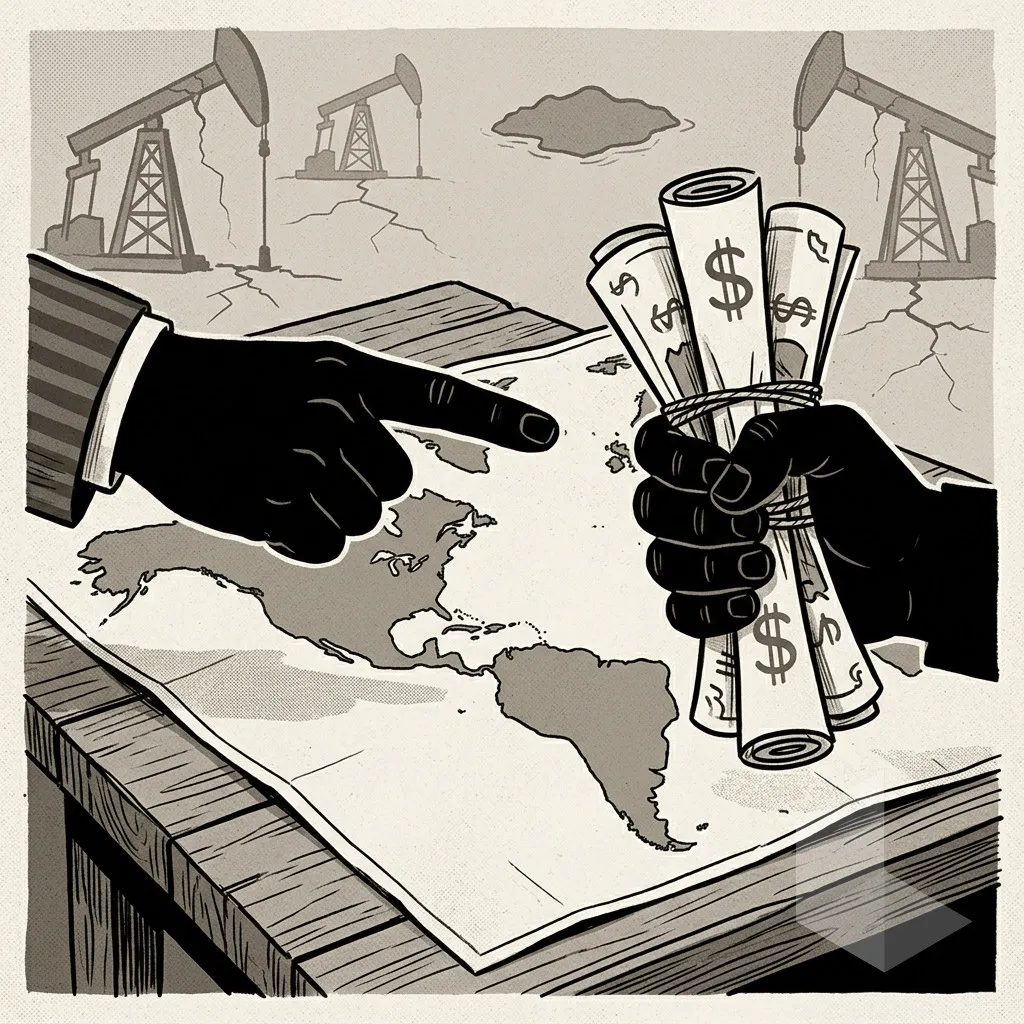
China has formally denounced recent expansions of United States sanctions against Cuba, labeling the measures as unlawful. The criticism, reported by Indian media, follows an executive order signed by U.S. President Donald Trump in early May that broadened the scope of existing punitive economic measures targeting the Cuban government. Concurrent reporting from Latin America highlights persistent opacity in Venezuela's oil sector, despite U.S. administration promises of transparency, situating the Cuba sanctions within a wider pattern of U.S. policy in the region characterized by assertive economic pressure and contested outcomes.
The Hindu's Reporting on China's Stance The Hindu, a mainstream Indian publication, frames the development primarily as a diplomatic rebuke from Beijing directed at Washington. The report centers on the Chinese government's characterization of the expanded sanctions as 'illegal,' directly quoting the term. It notes the action was taken via a presidential executive order on May 1, providing a specific date for the policy change. The Indian source presents the information factually, focusing on the international reaction from China without delving into the historical context of the U.S.-Cuba relationship or the specific details of the new sanctions. The framing is that of a discrete geopolitical event: a U.S. action provoking a critical response from another major power.
Clarín's Context on Regional Policy Patterns Argentina's Clarín, a major Latin American newspaper, provides no direct coverage of the Cuba sanctions or China's response. Instead, its related reporting offers crucial regional context by examining U.S. policy toward Venezuela. The article details a gap between promises made by Trump officials and their Venezuelan allies and the on-the-ground reality. It reports that while these actors pledged a new era of openness to manage Venezuela's oil wealth, the sector remains opaque, described as a 'black hole.' This framing suggests skepticism about the efficacy and sincerity of U.S.-led initiatives in the region, implying that policies often fail to achieve their stated objectives of reform and transparency.
Framing the Conflict The two sources frame the issue of U.S. hemispheric policy through distinctly different lenses. The Hindu isolates a specific action-and-reaction cycle between the U.S. and China, treating it as an episode in great-power diplomacy. The legality of the sanctions is presented as a claim made by the Chinese government. Clarín, in contrast, embeds its analysis within the lived experience of Latin America, focusing on outcomes rather than declarations. Its narrative is one of continuity in dysfunction—where U.S. interventions, even those couched in terms of promoting transparency, do not necessarily disrupt entrenched local practices of secrecy and corruption. This framing indirectly questions the practical impact of policies like sanctions, which are designed to exert external pressure.
Synthesis and Broader Implications Synthesized, the reports paint a picture of U.S. policy facing dual challenges: direct geopolitical pushback from rivals like China and persistent implementation deficits within the target regions themselves. China's 'illegal' accusation represents a formal, state-level challenge to the legitimacy of U.S. unilateral sanctions, seeking to frame them as violations of international norms. Meanwhile, the situation described in Venezuela by Clarín illustrates a practical challenge, where the complex realities of a target nation can absorb or deflect external pressure, undermining the policy's intended effects. Together, they suggest that U.S. coercive economic measures are contested both in the court of international opinion and in the messy arena of local political and economic structures. The divergence in reporting underscores how the same overarching U.S. foreign policy approach is viewed through the prism of inter-state competition in Asia versus the prism of regional consequence and efficacy in Latin America.