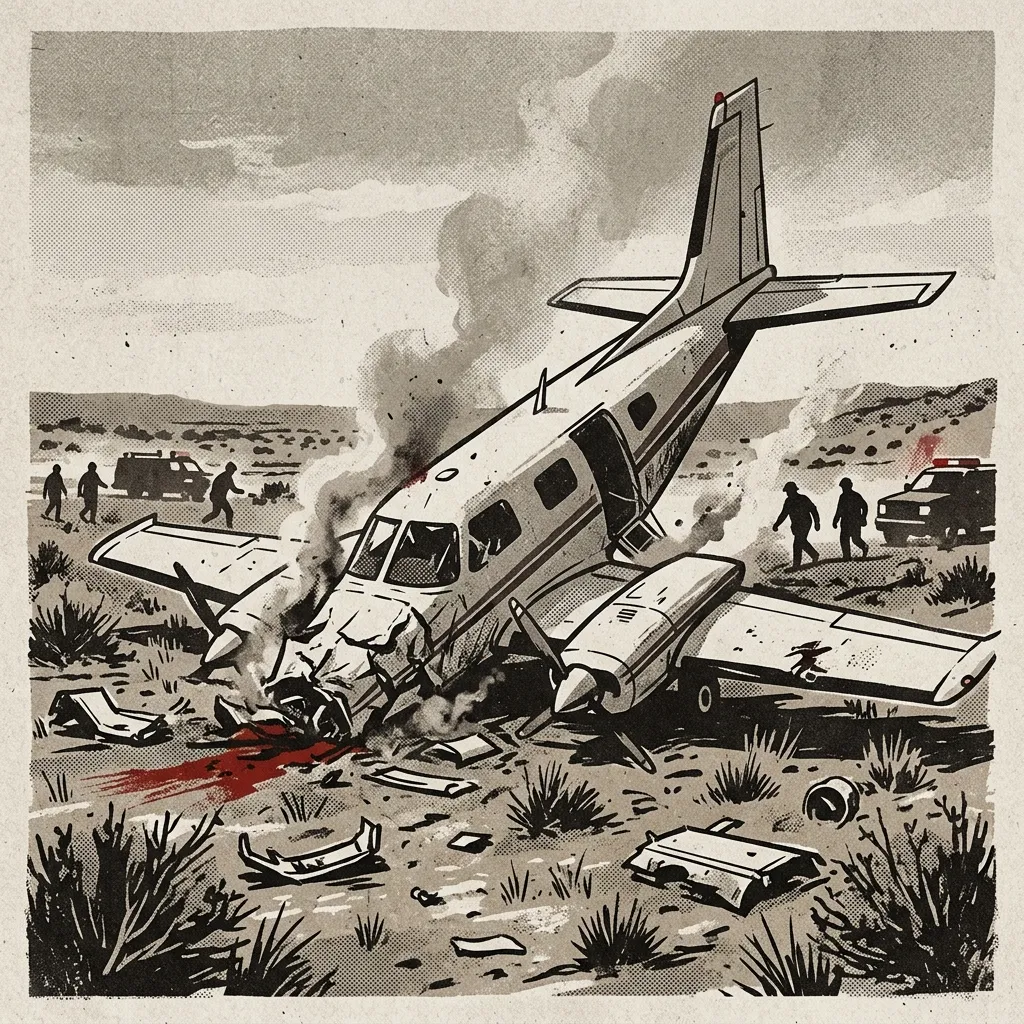
A small aircraft crashed near Juba, the capital of South Sudan, resulting in the deaths of all fourteen people on board, according to reports from multiple international news outlets.
Both Al Jazeera and BBC News confirm the total fatality count of fourteen passengers and crew, though neither source provides details about the identities of those killed or the specific flight's origin and destination.
Aircraft Type and Crash Circumstances
Al Jazeera identifies the aircraft as a Cessna, a detail not mentioned in the BBC's coverage. The Middle Eastern outlet describes preliminary reports indicating the crash "may have crashed due to bad weather conditions that caused low visibility."
The BBC frames the cause more cautiously, stating that "authorities are investigating but early reports suggest bad weather and poor visibility may be to blame." This formulation emphasizes the ongoing investigative process before presenting the weather hypothesis, whereas Al Jazeera leads with the weather explanation as the primary preliminary finding.
What Remains Unreported
Both sources provide minimal detail about the incident. Neither outlet specifies:
- The exact crash location relative to Juba
- The time of the incident
- Whether the aircraft was arriving, departing, or conducting other operations
- The airline or operator of the flight
- The nationalities of those aboard
- Whether there were any survivors initially or if all died on impact
- The specific weather conditions at the time
Both sources acknowledge that information comes from "preliminary reports" or "early reports," signaling that details remain uncertain and subject to change as investigations proceed.
Investigative Status
The BBC explicitly states that "authorities are investigating," foregrounding the official response. Al Jazeera's coverage focuses on what preliminary reports indicate about the crash cause, without explicitly mentioning an ongoing investigation, though the use of "preliminary" implies one is underway.
Neither source identifies which specific authorities are conducting the investigation—whether South Sudanese civil aviation officials, international bodies, or other entities.
Regional Aviation Context
Neither outlet provides context about aviation safety in South Sudan or the region, previous incidents, or the challenges facing air travel in the country. Both treat the crash as a discrete incident without connecting it to broader patterns or systemic issues.
The brevity of both reports suggests information remains limited in the immediate aftermath of the crash, with both outlets publishing what amounts to initial alerts rather than comprehensive coverage. The convergence on the fourteen-fatality figure and the weather-related preliminary cause suggests these details come from official sources, though neither outlet explicitly attributes the information.
Framing Differences
While both sources report essentially the same facts, subtle differences emerge in presentation. Al Jazeera's headline specifies the location as "near South Sudan's Juba," while the BBC uses "in South Sudan," a less geographically precise formulation. Al Jazeera's inclusion of the aircraft type (Cessna) provides slightly more technical detail than the BBC's generic "plane."
The BBC's emphasis on authorities investigating before mentioning the weather hypothesis suggests a more cautious editorial approach to preliminary causation claims, while Al Jazeera presents the weather explanation more directly as what preliminary reports indicate.