
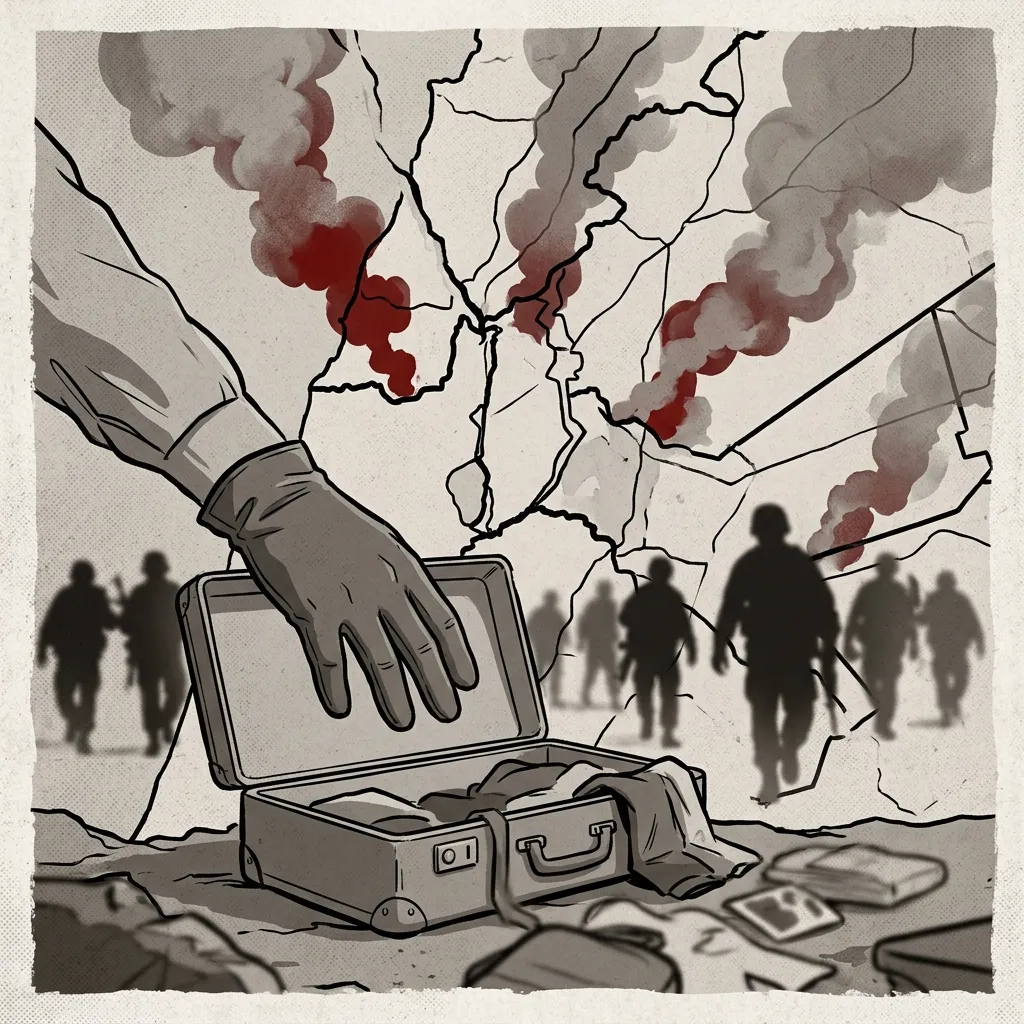
Reports from Lebanon indicate ongoing hostilities between Israel and Hezbollah despite a ceasefire agreement, with conflicting narratives emerging over the nature of the violations. Lebanese officials accuse Israel of failing to uphold the truce, while Israeli military actions are framed by some sources as targeting Hezbollah operatives. Simultaneously, separate allegations have surfaced accusing Israeli soldiers of looting civilian property during recent ground operations in southern Lebanon, claims which the Israeli military says it is investigating.
RT's Report on Looting Allegations The Russian outlet RT focuses its coverage on what it describes as footage appearing to show Israeli soldiers looting homes in southern Lebanon. The report states that the soldiers were filmed damaging property and treating the situation lightheartedly. RT directly links this to a prior investigation by the Israeli newspaper Haaretz, which it says alleged widespread looting with commanders ignoring the behavior. The Russian source quotes the Israeli Defense Forces (IDF) Chief of Staff as saying that if such incidents occurred, they would contradict military values. RT's framing presents the allegations as credible, supported by visual evidence and prior reporting from within Israel, placing the onus on the IDF to address the claims.
The Hindu's Report on Ceasefire Demands India's The Hindu provides a brief but pointed report centered on a statement from Lebanon's President. The article quotes President Michel Aoun asserting that Israel must first fully implement the ceasefire before any negotiations can proceed. The Lebanese leader is cited as condemning the continuation of Israeli attacks. This source frames the situation through the lens of diplomatic demands and official state positions, presenting Lebanon's presidency as calling for strict adherence to the agreed truce as a prerequisite for further dialogue. The report implicitly positions Israel as the party failing to meet its ceasefire obligations.
BBC News on Ongoing Fighting and Strikes The BBC's coverage, drawn from two separate reports, emphasizes the continuation of deadly violence despite the ceasefire. One article details a specific incident described as an Israeli 'double-tap' strike—a term implying a second strike targeting first responders—which Lebanese officials say killed three rescue workers. The BBC notes that Israel's military stated the strikes targeted a Hezbollah commander and were part of attacks that killed nine people in total. A separate BBC video report explicitly states that fighting between Israel and Hezbollah has not stopped, noting the truce was brokered by the United States and began 12 days prior. The British broadcaster's framing highlights the human cost of the continued clashes and introduces the concept of controversial military tactics, while also reporting Israel's justification for its actions.
Framing the Conflict The sources present distinctly different angles on the violations of the Lebanon-Israel ceasefire. RT constructs a narrative of Israeli military misconduct against civilians, focusing on alleged criminal behavior (looting) by soldiers during operations. This framing suggests a breakdown of military discipline and international law. The Hindu adopts a diplomatic and procedural frame, highlighting the Lebanese state's formal position that Israel is not upholding the agreement, which blocks the peace process. The BBC prioritizes the immediate, lethal consequences of the ongoing fighting, reporting on specific strikes and casualties. While it includes Israel's rationale—targeting Hezbollah—its use of terms like 'double-tap' and emphasis on rescue worker deaths carries connotations of contentious warfare tactics. None of the sources delve deeply into Hezbollah's actions or potential violations, with the BBC being the only one to mention the group's role in the continuing combat.
In synthesis, the reporting diverges along lines of alleged criminality, diplomatic procedure, and battlefield lethality. The broader implication is a ceasefire in name only, with one side (Israel) portrayed across the reports as the primary active violator—whether through alleged looting, ignored diplomatic terms, or deadly strikes. The narratives collectively suggest a conflict where the formal truce has failed to curb violence or alleged abuses, with each source selecting a different facet of this failure to underscore its reporting.