
Maritime Security Crisis Escalates
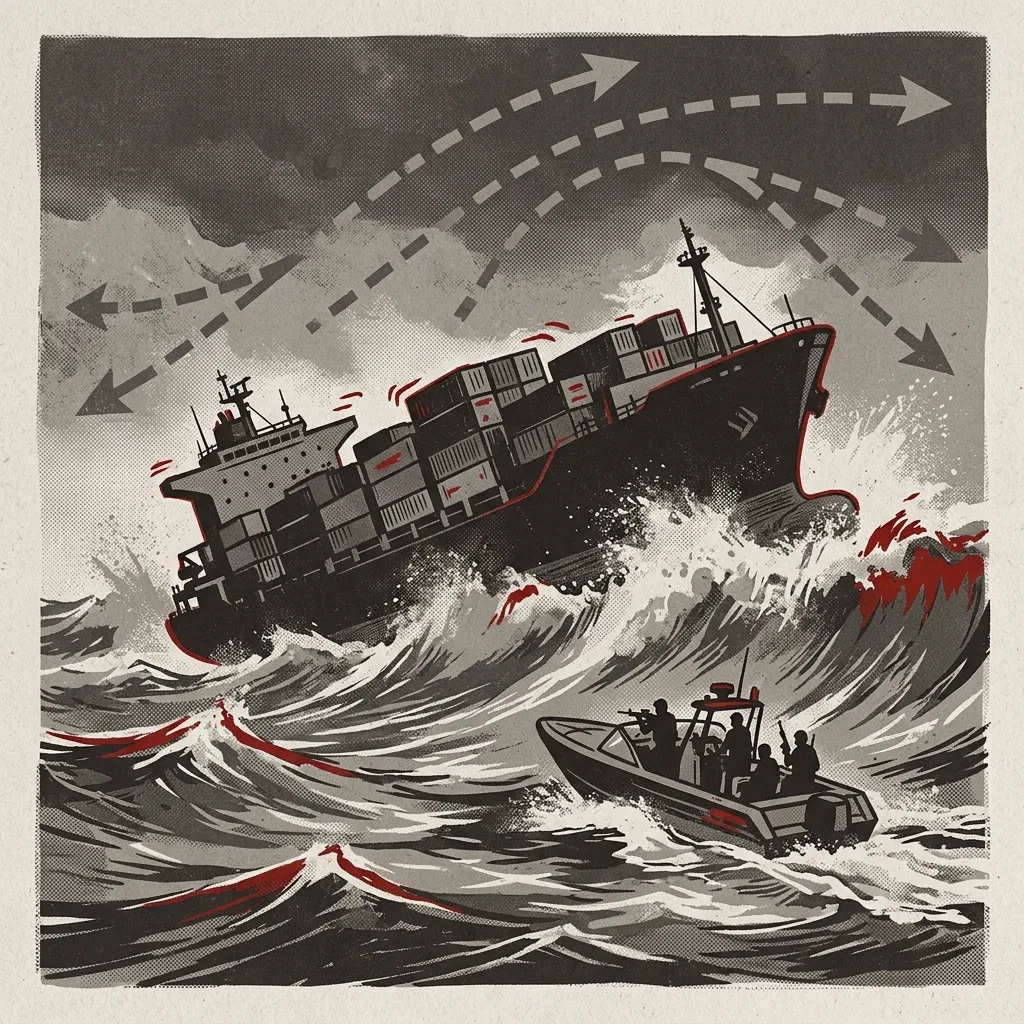
Suspected pirates have seized control of a cargo vessel and are steering it toward Somalia, according to reports from maritime monitoring agencies. The incident marks the latest in a sharp uptick of piracy activity in the region, with at least four suspected attacks occurring within the past week alone.
Diversion of Maritime Traffic
The hijacking comes amid broader disruptions to global shipping patterns. Al Jazeera reports that maritime traffic is being diverted toward African routes while the Strait of Hormuz remains essentially closed, though the source does not specify the cause of the strait's closure or whether it is directly connected to the piracy surge. This diversion may be concentrating vessel traffic in areas where pirate groups operate, potentially creating more targets of opportunity.
Rising Threat Assessment
The United Kingdom's maritime monitoring authority has elevated the threat level for the region in response to the cluster of incidents. BBC News reports that British maritime officials are tracking at least four suspected piracy events off the Somali coast within a seven-day period, representing a significant concentration of activity compared to recent years when Somali piracy had largely subsided.
Neither source provides details about the specific cargo vessel currently under pirate control, including its flag state, crew composition, cargo type, or the number of individuals aboard. The sources also do not specify whether ransom demands have been made or what measures, if any, international naval forces are taking in response.
Regional Context
The Horn of Africa, particularly waters off Somalia, experienced a severe piracy crisis roughly a decade ago that prompted international naval patrols and other counter-piracy measures. Those efforts, combined with improved security aboard commercial vessels and stabilization efforts within Somalia itself, had dramatically reduced piracy incidents in subsequent years. The current spike suggests either a resurgence of organized pirate networks or the emergence of new groups exploiting current maritime traffic patterns.
Information Gaps
Both sources provide limited detail about the operational aspects of the hijackings. There is no information about whether the pirates are using mother ships, the types of weapons involved, or whether any crew members have been harmed. The sources do not indicate whether the four incidents referenced by BBC News include the cargo vessel mentioned by Al Jazeera or represent separate events.
Additionally, neither source explains the current status of the Strait of Hormuz or why it is described as essentially closed. This detail, mentioned only by Al Jazeera, could be significant for understanding the broader maritime security picture and why shipping routes are being altered, but it remains unexplained in the available reporting.
International Response
While the UK has raised its threat assessment, neither source details what specific actions international authorities are taking. There is no mention of naval deployments, coordination between regional governments, or engagement with shipping companies to enhance vessel security. The sources also do not indicate whether other nations beyond the UK have adjusted their maritime security postures.
Implications for Global Shipping
The combination of piracy activity and the reported closure of the Strait of Hormuz represents a significant challenge for global maritime commerce. The Strait of Hormuz is one of the world's most critical oil transit chokepoints, and its unavailability would force tankers and other vessels to seek alternative routes. If those alternative routes pass through areas with active piracy, as Al Jazeera's reporting suggests, shipping companies face compounded security and operational challenges.
The current situation remains fluid, with limited confirmed information about the fate of the hijacked vessel, the status of its crew, or the broader strategic picture in the region.