
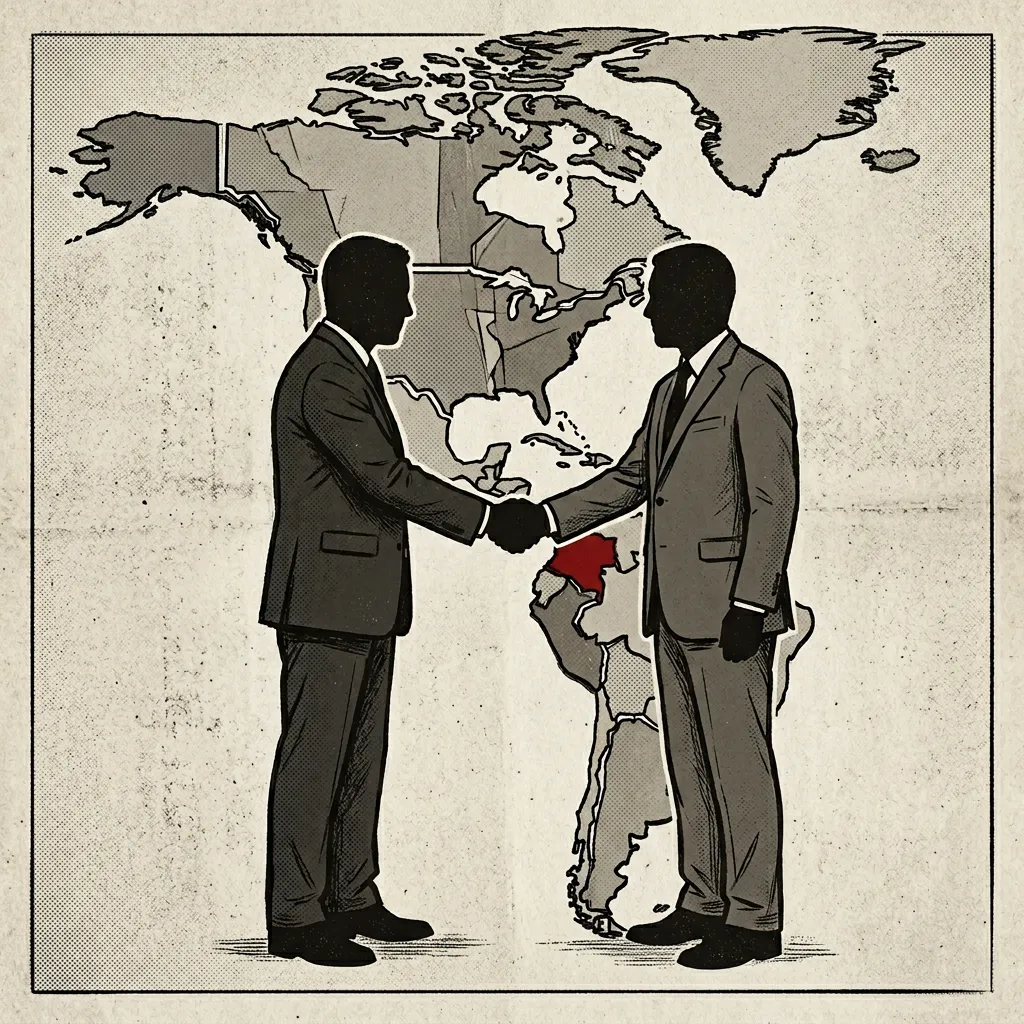
Brazilian President Luiz Inácio Lula da Silva is scheduled to travel to the United States later this week for a meeting with US President Donald Trump at the White House. The encounter, confirmed by multiple media reports, marks a significant diplomatic engagement between the two leaders of the Western Hemisphere's largest nations. While the core fact of the meeting is consistent across reports, the framing of its context, agenda, and political implications varies notably between regional and international sources, reflecting differing editorial priorities and audience concerns.
Regional Focus on Bilateral Mechanics and Domestic Politics Latin American sources provide the most detailed context for the meeting. Clarin, an Argentine publication, frames the encounter primarily as a functional diplomatic event. It reports that the agenda will consist of a working meeting focused on unblocking bilateral issues, suggesting a pragmatic approach to resolving specific points of contention between the two countries. However, Clarin introduces a distinct political context absent from other reports, noting that the confirmation of the trip follows a negative moment for Lula's government, citing two recent setbacks in the Brazilian Congress. This framing ties the international diplomacy directly to the Brazilian president's domestic political challenges.
Folha de S.P. Paulo, a major Brazilian newspaper, also confirms the planned travel and potential meeting. Its reporting, while brief in the provided excerpt, uses phrasing that suggests the encounter has been anticipated or delayed, noting Lula may "finally meet" with Trump. This implies a history of planned or potential meetings that have not materialized, adding a layer of long-awaited diplomatic engagement to the story. The source's focus is squarely on the actions of the Brazilian president, with less immediate emphasis on the meeting's substantive agenda compared to Clarin's report.
International Reporting as a Straightforward Announcement In contrast, Al Jazeera's report is the most succinct and neutral, presenting the information as a straightforward news announcement. It states that media reports confirm the Brazilian president will meet his US counterpart at the White House in the coming days. The Middle Eastern source offers no additional context regarding the meeting's agenda, the political situation in either country, or the historical relationship between the two leaders. Its framing is that of a basic diplomatic calendar update for a global audience, devoid of the regional political analysis present in the Latin American reports.
Framing the Engagement The divergence in framing is clear. The Latin American sources, particularly Clarin, contextualize the summit within a specific political moment for President Lula, potentially interpreting the trip as a move to bolster his standing or shift focus after domestic difficulties. The agenda is presented in practical, transactional terms centered on bilateral issues. Folha's mention of a long-awaited meeting adds a temporal dimension, hinting at a complex or stalled prior relationship. Al Jazeera, serving a distant international audience, strips the event of this layered context, presenting it as an isolated fact of state-level interaction. None of the provided sources speculate on the content of the bilateral issues or offer commentary on the ideological differences between the left-leaning Lula and the right-leaning Trump, sticking to reports of the meeting's logistics and immediate political backdrop.
Synthesis of Broader Implications The reporting collectively confirms a high-level diplomatic channel remains open between Brazil and the United States, regardless of the leaders' political orientations. The variation in coverage underscores how the significance of such an event is filtered through regional lenses. For Latin American observers, the meeting is woven into the fabric of local politics and the practical management of hemispheric relations. For a global outlet, it is a notable datapoint in international relations but without the imperative to connect it to domestic political winds. The absence of detailed agenda points from all sources leaves the substantive outcomes of the meeting an open question, with the focus instead on its occurrence and immediate political timing.