
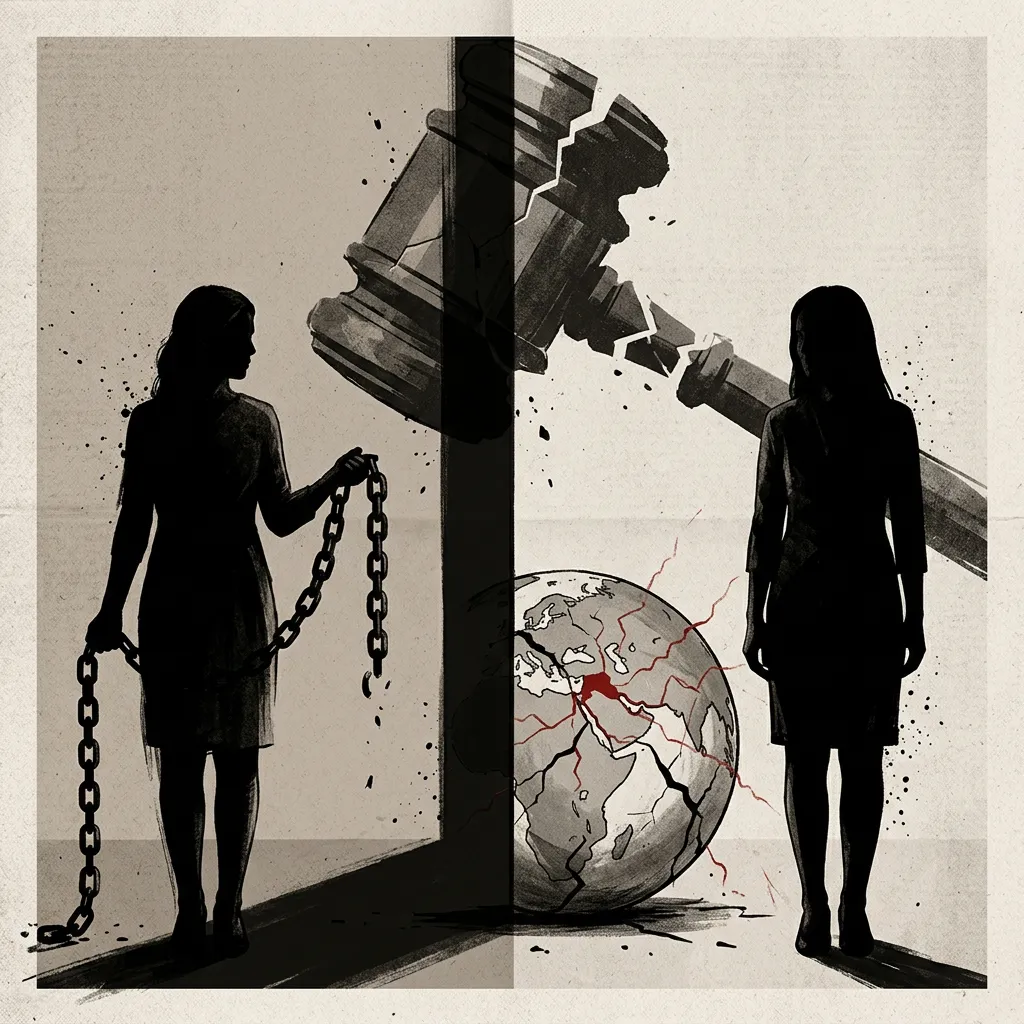
Two Australian women have been charged with serious international crimes following their return from Syria, where they were allegedly linked to the Islamic State (ISIS) group. The charges, announced by Australian authorities, relate to alleged slavery offenses and crimes against humanity, marking a significant legal step in dealing with citizens who joined or supported the extremist organization. A third woman faces separate terrorism-related charges. The cases highlight the complex legal and security challenges nations face in repatriating and prosecuting individuals from conflict zones.
Reporting from the BBC, a mainstream European outlet, frames the event as a significant counter-terrorism development. The BBC's headline emphasizes the charges of 'crimes against humanity' and the women's links to 'Islamic-State.' Its report notes that a third woman was charged with the separate offense of 'joining a terrorist organisation.' This framing places the story within a broader narrative of international justice and the global effort to hold ISIS members accountable for systemic atrocities, not just terrorism. The BBC's language is formal and aligns with legal terminology used in international law, focusing on the gravity of the charges themselves.
The Daily Maverick, an independent African publication sourcing from Reuters, presents a similar factual account but with distinct emphasis and context. Its headline specifies 'slavery offences' as the core charge, directly connecting the alleged crimes to the women's return 'from Syria.' The report provides additional logistical detail, noting the women returned 'overnight' and had been 'detained in a refugee camp for more than seven years.' This framing introduces elements of repatriation and prolonged detention, contextualizing the charges within a timeline of displacement and custody. By leading with 'slavery,' the Daily Maverick/Reuters report highlights a specific alleged act within the ISIS framework, whereas the BBC leads with the broader legal category of 'crimes against humanity.' Both sources agree on the fundamental facts: two women charged, their ISIS links, and their return from Syria.
Framing the Legal and Narrative Context
The divergence in reporting centers on the emphasis of the charges and the inclusion of background context. The BBC's coverage adopts a top-down perspective, focusing on the legal outcome and its place in international jurisprudence. Mentioning the third woman charged with a terrorism offense reinforces a narrative of a comprehensive legal response to different levels of involvement with ISIS. In contrast, the Daily Maverick's report, via Reuters, incorporates a more granular narrative of the individuals' journeys—mentioning the overnight return and the seven-year camp detention. This subtly frames the story not just as a legal event, but as the culmination of a long, unresolved humanitarian and security dilemma involving citizens in camps like al-Hol. The omission of the third woman's case in the Daily Maverick headline suggests a tighter focus on the novelty of slavery charges in this context.
Synthesizing these perspectives reveals a multifaceted story. At its core is a landmark prosecution by Australian authorities, utilizing serious international law charges against returning citizens. The BBC's framing underscores the precedent-setting nature of applying crimes against humanity statutes in a domestic counter-terrorism context. The Daily Maverick/Reuters angle adds crucial layers about the operational and human dimensions: the process of repatriation from a conflict zone and the years of limbo preceding it. Together, they illustrate the dual challenge for nations: exercising legal sovereignty to prosecute alleged heinous acts while managing the complex logistics and policies of repatriating individuals from failed states. The charges signal a willingness to pursue the most severe accusations available, potentially setting a template for other countries grappling with similar returnees.