
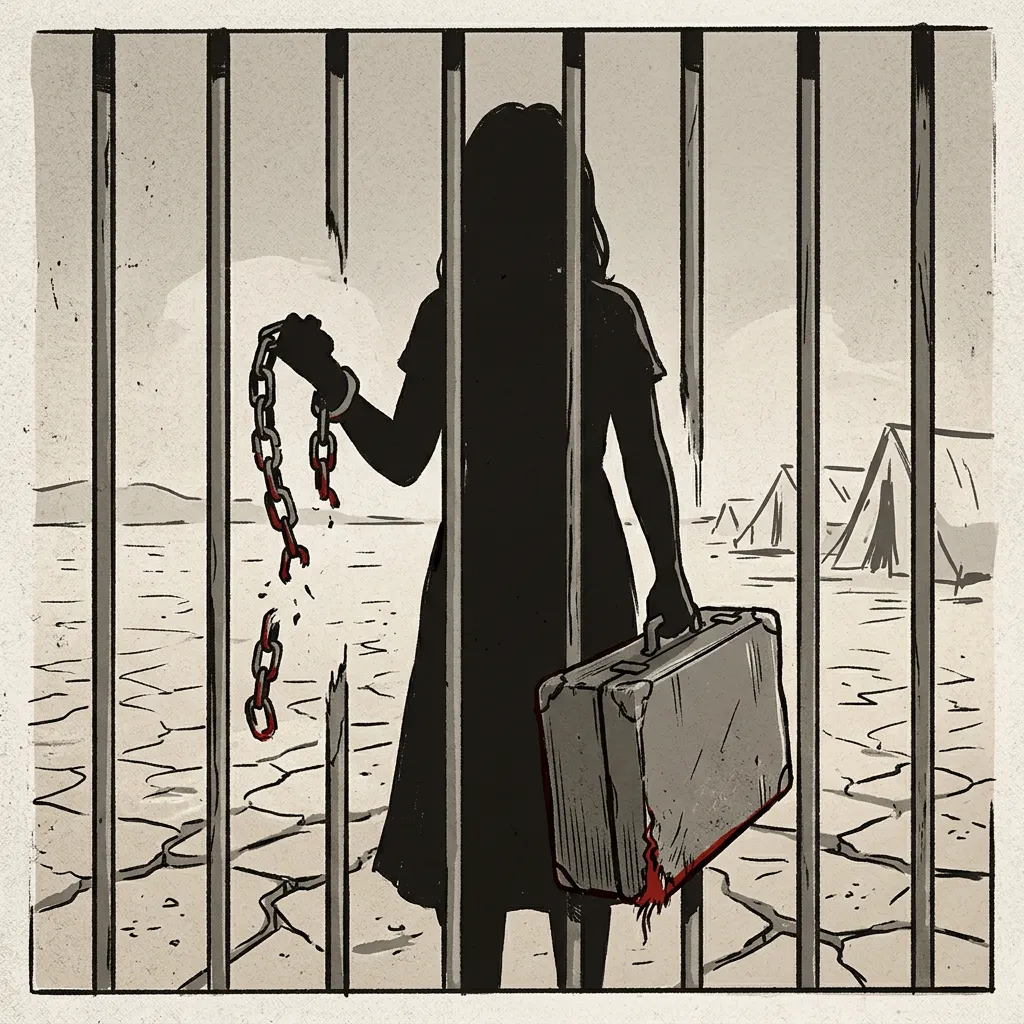
Australian authorities have charged two women linked to the Islamic State extremist group with slavery offenses, marking a significant legal development following their return from Syria. A third woman who also returned was charged with membership in a terrorist organization. The charges stem from actions allegedly committed while the women were in Syria, where they had been detained in a refugee camp for over seven years before their repatriation. This case highlights the complex legal and humanitarian challenges nations face in dealing with citizens who were affiliated with extremist groups abroad.
The BBC News report, originating from Europe, frames the incident as a matter of international justice and crimes against humanity. The publication emphasizes the gravity of the charges, noting that the two women are accused of offenses that transcend national borders and fall under the category of universal crimes. The BBC's narrative focuses on the legal precedent and the broader implications for handling similar cases globally, situating the event within a context of international law and counter-terrorism efforts. It also briefly mentions the third woman's charge related to terrorist organization membership, integrating it into a cohesive story about accountability for involvement with Islamic State.
Daily Maverick, an independent African source carrying a Reuters dispatch, presents the story with a focus on the operational details and the timeline of events. Its report specifies that the women returned overnight and had been in a Syrian refugee camp for more than seven years. This framing underscores the prolonged detention and the logistical aspects of their repatriation. The emphasis is on the factual sequence: arrest, charge, and the specific allegation of slavery offenses. The language is direct, highlighting the police announcement and the immediate legal consequences, with less explicit commentary on the international legal dimensions compared to the BBC.
Framing the Conflict
The two sources converge on the core facts: two women charged with slavery offenses linked to ISIS, and a third charged with terrorist membership. However, their framing diverges in emphasis and contextual depth. BBC News adopts a macro-level perspective, linking the charges to the concept of crimes against humanity and placing the event within a global narrative about justice and extremism. This approach implicitly addresses the universal moral and legal standards applicable to such cases. Daily Maverick, via Reuters, provides a micro-level, procedural account, concentrating on the specific actions of Australian police, the timing of the return, and the duration of detention. This framing presents the story as a national law enforcement matter with international connections, rather than primarily an international human rights issue.
Both sources omit certain details that could shape public perception. BBC does not elaborate on the conditions in the Syrian refugee camp or the humanitarian context of the women's detention, potentially leaving readers without a full picture of their circumstances prior to charges. Daily Maverick mentions the camp but does not explore the legal nuances of crimes against humanity versus slavery offenses under Australian law, possibly simplifying the legal complexity. These omissions reflect different editorial priorities: one towards overarching legal principles, the other towards immediate factual reporting.
The broader implications of this case touch on several enduring global issues: the treatment of returning citizens associated with terrorist groups, the application of domestic law to overseas conduct, and the balance between justice and rehabilitation. Australia's decision to prosecute after years of detention signals a firm stance on accountability, regardless of time elapsed or prior custody. It also raises questions about other nations' policies regarding similar returnees and the international coordination needed to address such cases uniformly. The charges, particularly those involving slavery, underscore the severe abuses perpetrated by Islamic State and the ongoing efforts to hold perpetrators accountable, even those who may have been victims of circumstance or coercion themselves.
Ultimately, this synthesis reveals how regional media lenses shape the narrative around transnational crime. European-focused reporting tends to contextualize events within international frameworks, while African-sourced, wire-service-based reporting often prioritizes crisp, factual delivery of new developments. Both are valid, yet they offer distinct pathways for public understanding of the same legal milestone.