
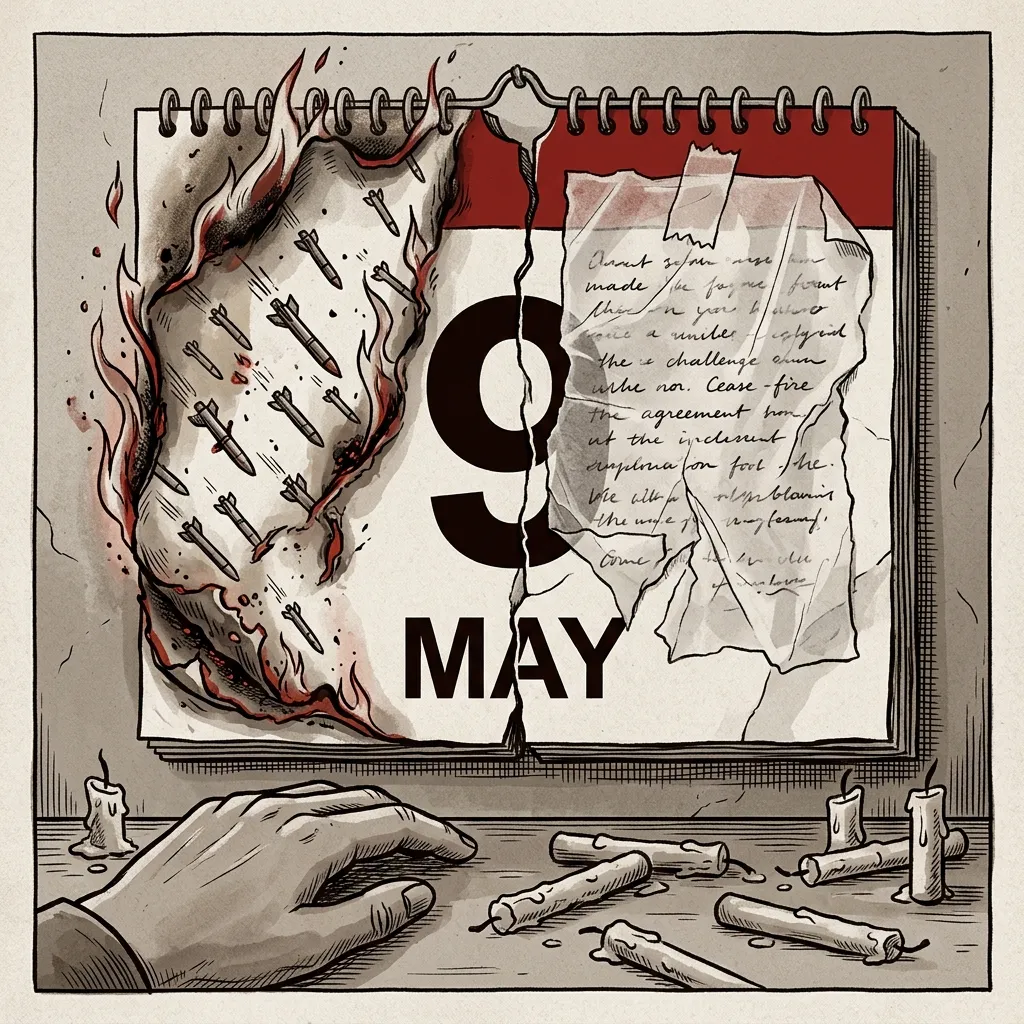
A series of Russian military strikes across Ukraine on May 5 resulted in significant civilian casualties, casting a shadow over competing proposals from Kyiv and Moscow for a temporary truce around Russia's annual Victory Day commemorations. The attacks, which killed at least 22 people and wounded dozens more according to Ukrainian officials, have intensified the diplomatic and rhetorical conflict surrounding the symbolic date of May 9, a major holiday in Russia marking the Soviet victory over Nazi Germany. The timing of the violence, juxtaposed with ceasefire discussions, has become a focal point for international condemnation and analysis of the war's trajectory.
European Media: Condemning Cynicism and Detailing the Toll European mainstream outlets framed the events as a stark contradiction between words of peace and acts of war. Le Monde led its report by detailing the human cost, noting at least 22 deaths and over 80 injuries from Tuesday's strikes. The publication explicitly linked the attacks to Russia's preparations for its Victory Day parade, quoting Ukrainian President Volodymyr Zelensky's condemnation of what he termed Russia's "utter cynicism." The narrative presented is one of a brutal assault deliberately timed ahead of a proposed humanitarian pause, emphasizing the dissonance. Similarly, the BBC reported the casualty figures while providing crucial context on the diplomatic maneuvering. It explained that Kyiv had announced it would begin a truce on May 6 and then "act symmetrically" in response to Moscow's declared pause for its parade. This framing presents both sides' proposals but situates the Russian attacks as a violent prelude to a period ostensibly meant for reflection and peace.
Russian Independent Media: Reporting Strikes with Factual Detachment The independent Russian outlet Meduza provided a detailed, localized account of the attacks, focusing on specific incidents with attribution to Ukrainian officials. Its report stated that a Russian military strike on Zaporizhzhia killed at least 12 people and wounded several others, hitting industrial facilities and damaging civilian infrastructure like residential buildings and a car wash. It separately reported that a Russian aerial bomb struck the center of Kramatorsk, killing five. Meduza's language is direct and declarative ("A Russian military strike...", "A Russian aerial bomb struck..."), attributing all information to named Ukrainian authorities like regional head Ivan Fedorov and President Zelensky. The report is devoid of the moral or contextual framing seen in European sources; it does not mention Victory Day, ceasefire proposals, or label the attacks as cynical. Its focus is strictly on the factual claims of the strikes' outcomes as reported by the Ukrainian side.
Framing the Conflict: Peace Proposals Versus Battlefield Reality The synthesis of these reports reveals a clear divergence in narrative emphasis. European sources (Le Monde, BBC) construct a story of profound hypocrisy and strategic timing, framing the Russian strikes as an act of "cynicism" that undermines its own ceasefire proposal and exploits the symbolic weight of Victory Day. The conflict is presented not just as a military engagement but as an information war where actions belie professed intentions. In contrast, Meduza's reporting isolates the military events from the broader political and symbolic context. It presents a snapshot of battlefield casualties as verified by one side, offering a narrower, more forensic account. This approach, while fact-based, omits the interpretive layer that gives the events their political resonance in international discourse, namely the juxtaposition with peace overtures.
Broader Implications of Divergent Narratives The reporting on these events underscores how the same factual core—deadly strikes occurring on May 5—serves different narrative purposes. For Western audiences, the story reinforces a pattern of Russian aggression that continues despite diplomatic gestures, strengthening the case for sustained support for Ukraine. The emphasis on Zelensky's condemnation and the timing near Victory Day paints Russia as leveraging a holiday of liberation to conduct attacks. The independent Russian media's more circumspect report, while not endorsing the Kremlin's narrative, provides a version of events that, by omission, does not directly challenge it on the grounds of hypocrisy or symbolism. This divergence highlights the challenge of separating battlefield developments from the intense propaganda war that accompanies them, where the timing of violence and peace proposals are themselves powerful weapons in shaping global public opinion.