
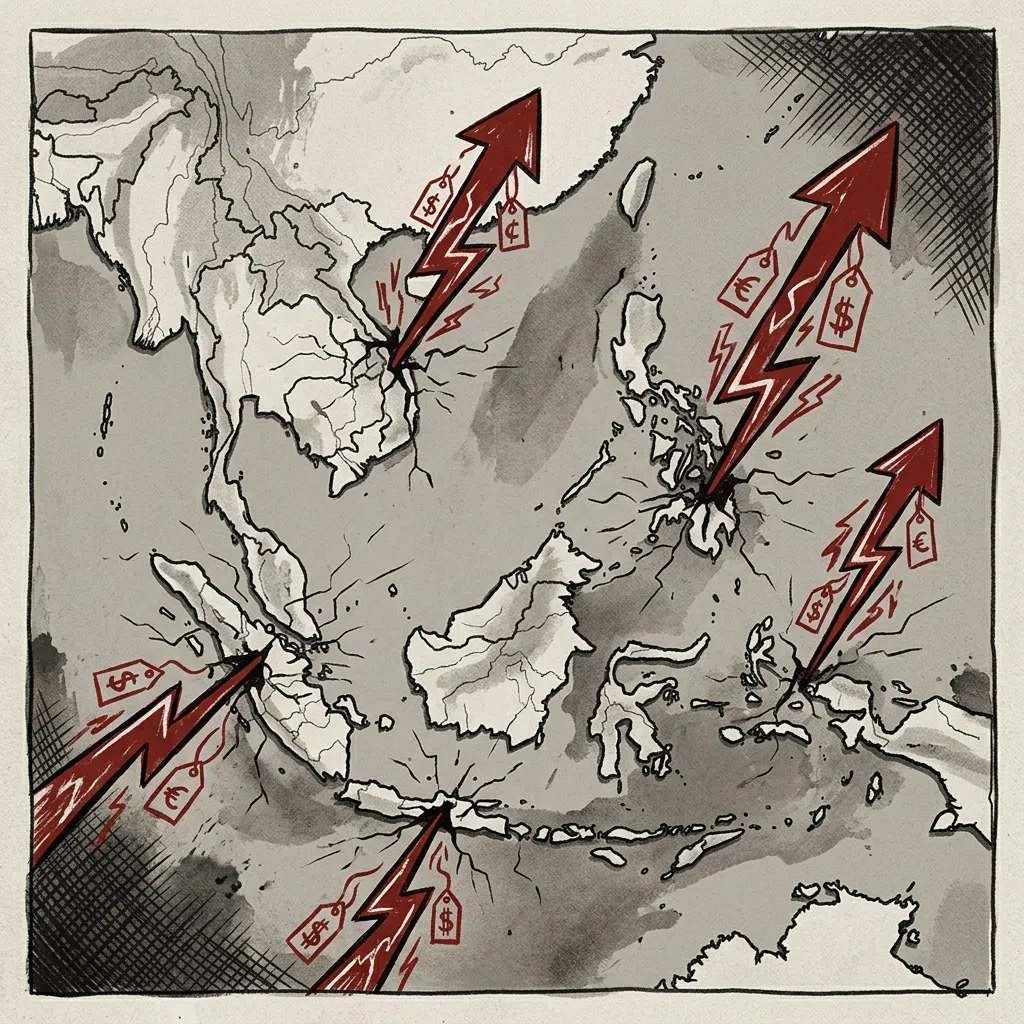
Leaders from the Association of Southeast Asian Nations (ASEAN) have convened in the Philippines for a regional summit, with discussions largely shaped by external geopolitical tensions and internal economic strain. Reports indicate that the official agenda is being overshadowed by urgent concerns over energy security and the rising cost of living for citizens across the member states. The meeting is taking place against a backdrop of global instability that directly impacts the fuel-importing economies of Southeast Asia.
According to a report from the Daily Maverick, which cites Reuters, the summit's focus has been pulled toward conflicts occurring far from the region. The source specifically highlights the crisis in the Middle East as a primary challenge, creating significant difficulties for ASEAN nations that rely heavily on imported fuel. The framing suggests that regional leaders are being forced to react to external shocks, with energy security becoming the central, unplanned topic of discussion due to these distant geopolitical events.
In contrast, coverage from Al Jazeera emphasizes a more domestic, ground-level perspective. Its report states that while leaders are meeting, the primary concern for residents is the high cost of living. This framing shifts the narrative from high-level geopolitics to the immediate impact on ordinary citizens, suggesting that rising fuel costs are not just a policy issue but a daily hardship that overshadows the summit's planned diplomatic agenda. The implication is a potential disconnect between the summit's discussions and the public's most pressing worries.
Framing the Agenda
The divergence in reporting centers on what is driving the summit's focus and whose concerns are paramount. The Daily Maverick's account presents a top-down view where international crises dictate the priorities of regional diplomacy. The energy crisis is framed as an external threat demanding a collective strategic response from leaders. Al Jazeera's coverage, however, employs a bottom-up lens, framing the issue through the lived experience of ASEAN citizens. Here, the summit is contextualized by public anxiety over affordability, implying that leaders are under pressure to address domestic socio-economic stability as much as international supply chains.
Synthesizing these perspectives reveals a summit grappling with interconnected challenges. External supply shocks, as reported in the first source, directly catalyze the domestic cost-of-living pressures highlighted in the second. The broader implication is that ASEAN's cohesion and policy effectiveness are being tested on two fronts simultaneously: navigating an unstable global order to ensure energy imports, and formulating credible responses to mitigate economic pain for their populations. The success of the meeting may be judged on its ability to bridge these external and internal dimensions of the same crisis.
Ultimately, the reports depict a regional bloc at a critical juncture. The summit is not merely a routine diplomatic gathering but a forum forced to address acute vulnerabilities. Whether the primary narrative is one of geopolitical risk management or domestic welfare protection, the underlying theme is the same: Southeast Asia's economic stability is highly susceptible to forces beyond its control, and its leaders are under scrutiny to develop a resilient, coordinated path forward.