
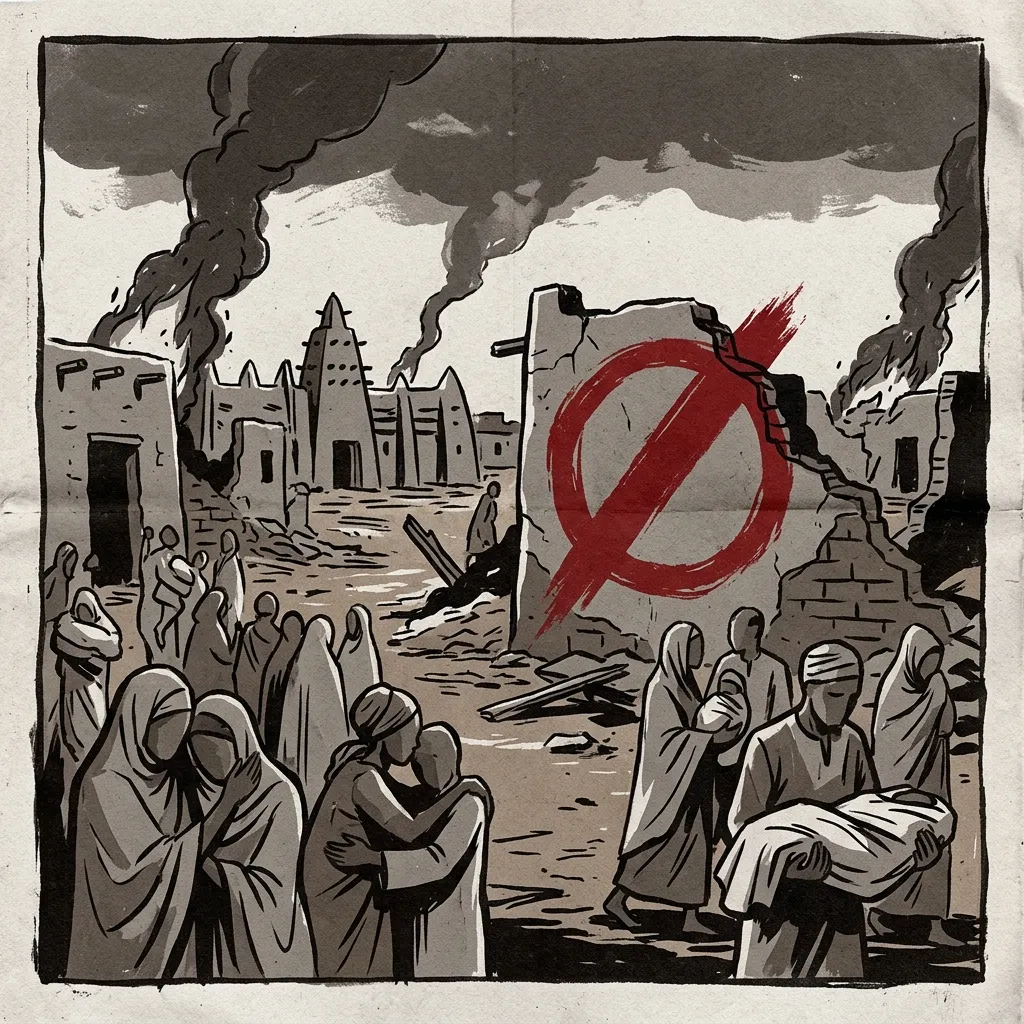
At least thirty people were killed in a pair of assaults on villages in central Mali on Wednesday, according to multiple reports. The attacks targeted communities in the Mopti region, a volatile area long plagued by intercommunal and jihadist violence. While both major news sources confirm the death toll and location, they present differing levels of detail regarding the identity of the attackers and the nature of the information provided by their sources.
Al Jazeera's reporting, citing information from the Reuters and AFP news agencies, provides a more specific attribution for the violence. The outlet states that several sources identified the assailants as being affiliated with the al-Qaeda network. This framing immediately places the incident within the broader context of the Sahel region's ongoing struggle against transnational jihadist groups linked to al-Qaeda and the Islamic State. By naming al-Qaeda, Al Jazeera's report suggests a clear ideological and operational motive behind the attacks, connecting them to a wider pattern of insurgent activity aimed at undermining state authority and imposing a strict interpretation of Islamic law. The report relies on international wire services, indicating its information is filtered through global news-gathering networks with their own sourcing protocols.
In contrast, the report from Africanews offers a more circumspect account regarding the perpetrators. While it confirms the death toll of over thirty and the twin-attack nature of the incident, it does not name any specific armed group. Instead, it attributes its information to a combination of local, security, and administrative sources within Mali. This framing focuses more on the domestic impact and the official response channels, highlighting the perspectives of those directly affected and the state apparatus tasked with responding. The omission of a named jihadist group could reflect a more cautious editorial approach, a difference in source access, or a desire to avoid premature attribution before official investigations conclude. It centers the narrative on the human cost and the national security challenge rather than on the international terrorist affiliations of the attackers.
Framing the Conflict The divergence in reporting reveals two distinct narrative frames for understanding the violence in central Mali. Al Jazeera employs a transnational jihadist frame, linking the local violence directly to a globally recognized terrorist organization. This framing is typical of international coverage that seeks to explain Sahelian instability through the lens of extremist ideologies and their cross-border networks. It implies the conflict is part of a larger, ideologically driven war. Africanews, while not contradicting the possibility of jihadist involvement, utilizes a localized security crisis frame. By citing local and administrative sources without specifying the group, the report emphasizes the immediate tragedy for Malian communities and the operational challenges for national authorities. This framing often resonates more with regional audiences who are acutely aware of the complex mix of jihadism, ethnic militancy, and banditry that fuels violence in the region, where attacker identities can sometimes be ambiguous or deliberately obscured.
Ultimately, both reports underscore the severe and persistent insecurity facing civilians in central Mali. The consistent details of the high death toll and the targeting of villages point to a brutal attack on a vulnerable population. The differing specifics on perpetrator identity highlight the challenges of reporting from conflict zones where information is fragmented and often mediated through various official and unofficial channels. For the international community, the Al Jazeera framing reinforces perceptions of Mali as a frontline in the fight against al-Qaeda affiliates. For regional observers, the Africanews report may reflect a more nuanced view of a multifaceted conflict where clear labels are sometimes difficult to apply. The tragedy itself, however, remains starkly clear regardless of the narrative lens.