
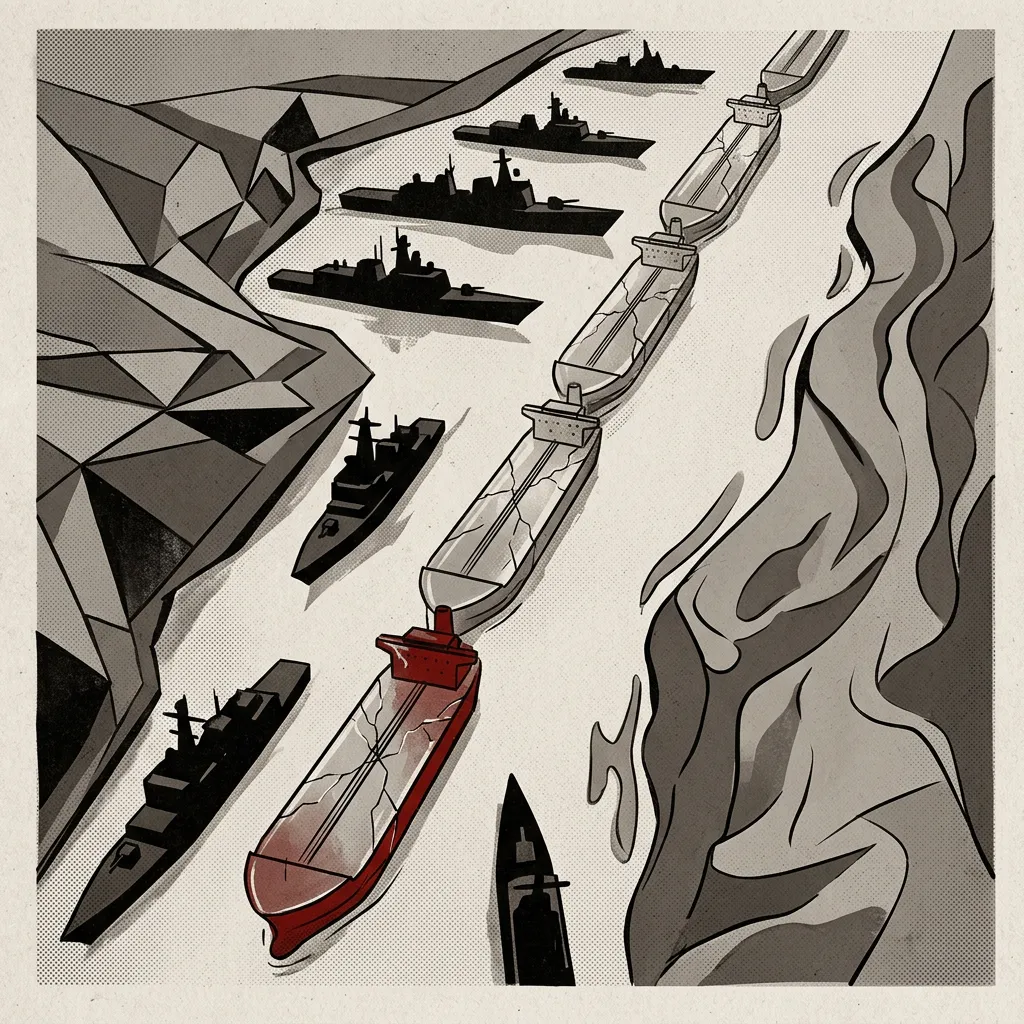
Heightened military and diplomatic activity around the Strait of Hormuz has prompted warnings from analysts that a miscalculation between the United States and Iran could trigger a broader regional conflict. The strategic waterway, a critical chokepoint for global oil shipments, has become a focal point of tension, with both powers showing little willingness to back down from their stated positions. Reports from regional and international sources highlight the precarious nature of the standoff, though they frame the risks and primary actors with notable differences in emphasis and perspective.
Africanews, reporting from a continent heavily impacted by global energy price fluctuations, presents the situation through the lens of economic uncertainty and expert analysis. Its coverage notes that the circumstances near the vital oil passage remain unpredictable. It highlights that Iran is persistently indicating its readiness to target vessels that do not adhere to its specified transit protocols. This framing focuses on the actions of Iran as a disruptive force creating instability, with the consequences implicitly tied to global market volatility. The report does not extensively detail the US military posture or diplomatic efforts, instead concentrating on the Iranian threat as the primary driver of the current unrest.
In contrast, Al Jazeera, based in the Middle East, provides a more direct and stark assessment of the bilateral confrontation. Its analysis centers on the inflexibility of both the United States and Iran, stating that neither party is prepared to make concessions regarding control and security of the Strait. This mutual intransigence, the source argues, significantly elevates the probability of an error in judgment that could spiral into a full-scale war. The language is more alarmist and explicitly bilateral, placing equal responsibility on Washington and Tehran for the heightened risk of conflict. The framing suggests a dangerous stalemate where both sides' policies are contributing to the potential for catastrophic escalation.
Framing the Confrontation The divergence in narrative between these sources is pronounced. Africanews adopts a more indirect, third-party analytical tone, situating the crisis as a geopolitical event with outsized implications for global commodity flows. Iran is portrayed as the active agent altering the status quo, with the international community, including analysts, observing the repercussions. Al Jazeera's framing is more immediate and politically charged, depicting a high-stakes game of chicken between two specific adversaries. It implicitly critiques the policies of both nations by suggesting their unwillingness to compromise is the root cause of the danger. While Africanews hints at economic disruption, Al Jazeera explicitly warns of military catastrophe, using the direct quote 'all-out war' in its title.
Synthesizing these perspectives reveals a consensus on the high stakes involved but a disagreement on the primary narrative. One frames the issue as regional instability with global economic fallout, driven by one party's actions. The other frames it as a binary power struggle where both principal actors share blame for pushing the region toward a precipice. The absence of a direct US-sourced perspective in this synthesis leaves the American rationale and military posture somewhat inferred, though Al Jazeera's report explicitly names the US as an uncompromising party. The overarching implication is that the Strait of Hormuz remains one of the world's most volatile flashpoints, where localized incidents risk triggering consequences far beyond the waters of the Persian Gulf.