
An attempted assassination of former U.S. President Donald Trump at a Washington hotel has drawn international attention, with reporting focusing on the suspect's actions and the broader implications of political violence. While the basic facts of the event are consistent across reports, the framing of the incident, the characterization of the suspect, and the emphasis on societal context vary significantly between Latin American and European news outlets.
Clarín's Framing: Societal Context and Lone Actors The Latin American publication Clarín provides the most detailed reporting, drawing from two distinct articles. One report centers on the immediate evidence against the suspect, identified as Cole Allen. It details that Allen took a selfie in his hotel room mirror minutes before the attack, visibly armed with a shoulder holster and a sheathed knife. This image was reportedly included in court documents where prosecutors are seeking to keep him detained pending trial on an attempted assassination charge. A separate Clarín article moves beyond the event itself to explore expert analysis of the underlying causes. It frames the shooting at the hotel, which was hosting a traditional annual dinner with journalists, as an alarm-raising incident. The publication highlights expert warnings about 'lone wolves,' political violence, and societal resentment as potential drivers, questioning the likelihood of similar episodes recurring. This dual approach presents both the factual legal proceedings and a broader sociological inquiry.
BBC News's Framing: Judicial Process and Evidentiary Focus In contrast, the BBC's coverage is more narrowly focused on the judicial process and the new evidence presented by authorities. The European broadcaster reports that prosecutors are arguing Cole Tomas Allen should remain in custody until his trial on the charge of attempting to assassinate President Donald Trump. The core of its report is the emergence of new images showing the suspect taking selfies before the shooting at the press dinner. The BBC's language is procedural and evidence-based, centering on the legal charge and the material submitted to the court to support the prosecution's request for continued detention. The report does not venture into analysis of political climates or expert commentary on societal trends, maintaining a tight focus on the developments within the legal case.
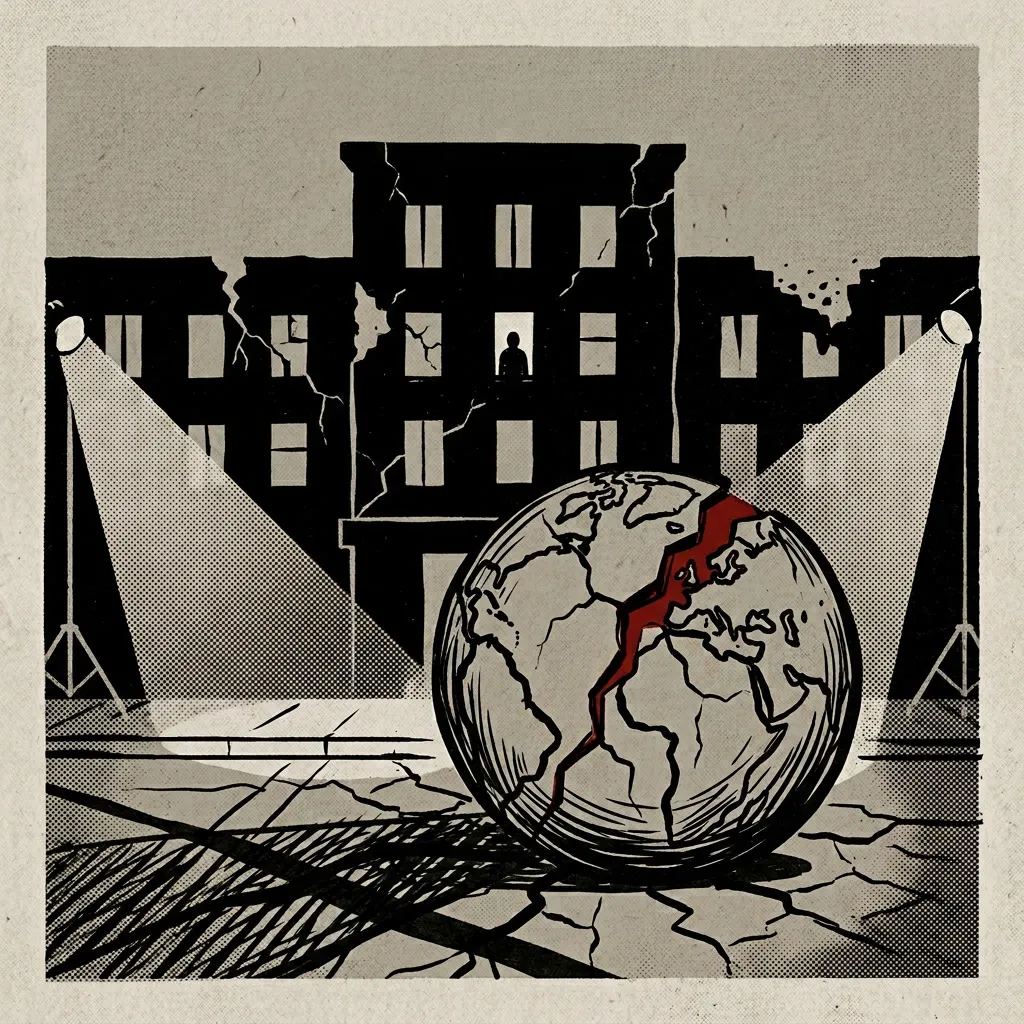
Framing the Incident: Event vs. Symptom The primary divergence in framing lies in whether the incident is treated as a discrete criminal event or as a symptom of a larger societal malaise. Clarín explicitly frames the attack within a context of escalating political violence and deep-seated resentment, using terms like 'lone wolves' and dedicating significant space to expert warnings about repeat episodes. The shooting is presented not just as news but as a case study for a worrying trend. The BBC, however, frames the story through the lens of an ongoing criminal prosecution. The emphasis is on the judicial arguments, the evidence (the selfies), and the formal charge. The context provided is limited to the event's setting—a Washington press dinner—rather than expansive societal commentary. This creates a distinction between a report analyzing the 'why' behind the violence and one detailing the 'what' of the legal response.
Concluding Synthesis The synthesis of these reports reveals a clear editorial divergence based on regional perspective and editorial mission. The coverage collectively confirms key facts: an armed individual, Cole Allen, attempted to attack Donald Trump at a Washington hotel event, and prosecutors have photographic evidence from before the incident. However, the implications drawn from these facts differ. The Latin American source uses the event as a springboard to discuss transnational concerns about political stability and the psychology of isolated attackers, reflecting perhaps a regional sensitivity to political volatility. The European source adopts a more restrained, fact-based approach common to many mainstream global news agencies, prioritizing the update on the legal case over speculative analysis. This contrast underscores how the same act of political violence can be contextualized either as a judicial proceeding or as an indicator of broader, more ominous social and political currents, depending on the narrative priorities of the reporting outlet.