
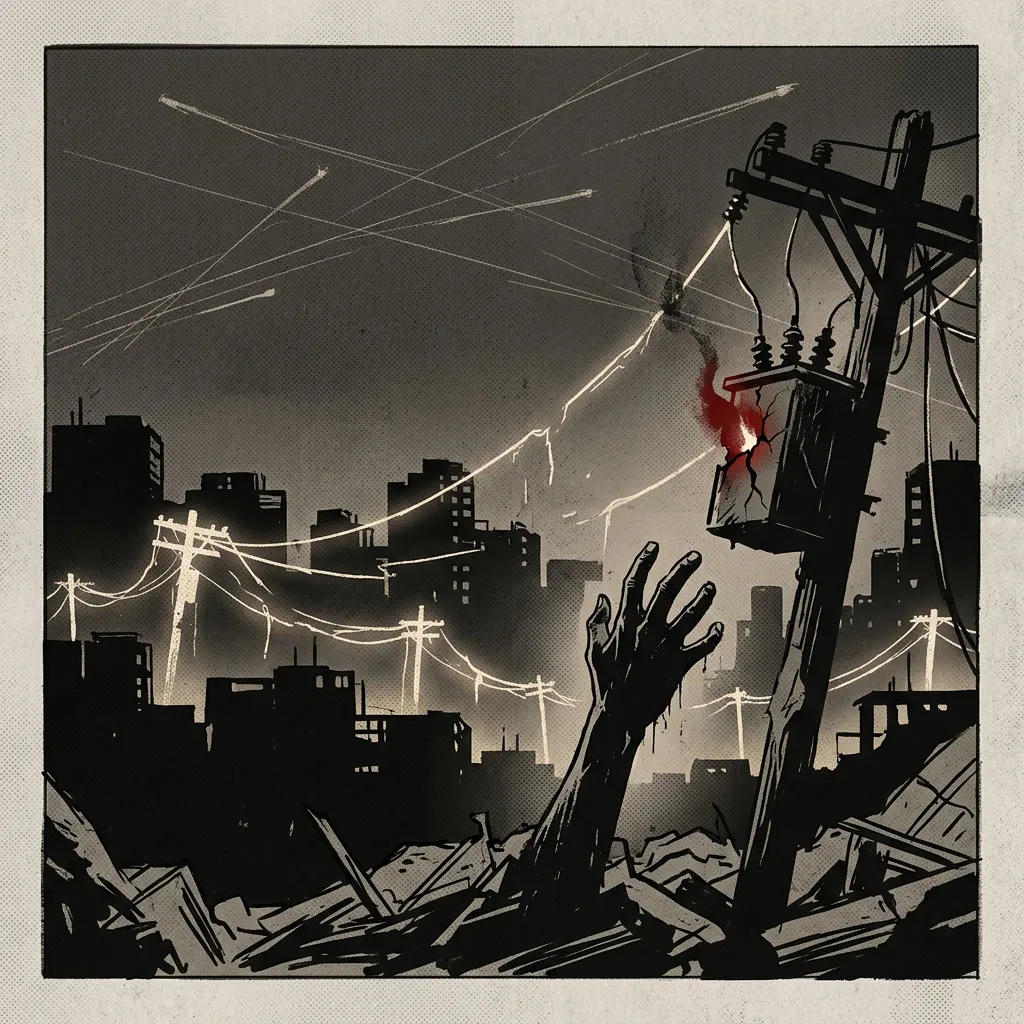
In late April and early May 2026, a significant intensification of aerial attacks across Ukraine was reported, characterized by record-breaking drone volumes and strikes targeting both energy infrastructure and civilian areas. While sources uniformly describe a high tempo of Russian-launched assaults, their reporting diverges in geographic focus, casualty accounting, and the framing of military versus civilian impacts, reflecting differing regional editorial priorities.
The Hindu, reporting from India, centers its coverage on a specific Ukrainian claim of a retaliatory strike. The publication notes that Ukrainian forces reportedly hit an oil terminal in Tuapse, a location in Russia's Krasnodar region, describing it as the fourth such attack on that area within a fortnight. The article pairs this with a brief mention of a Russian attack on the western Ukrainian city of Ternopil using over 50 drones, citing the city's mayor. The framing is largely factual and bilateral, presenting claims from both sides of the conflict in a sequential manner without extensive commentary on casualties or damage. The focus on the Ukrainian strike on Russian soil provides a counter-narrative to the one-way assault described by other sources, implicitly presenting the conflict as a mutual exchange of long-range attacks.
Meduza, an independent Russian outlet, provides detailed, casualty-focused reporting on attacks within Ukraine, specifically highlighting a major strike on Odesa. The report states that Russian drone strikes on May 1 set fire to two apartment buildings, injuring civilians—with conflicting figures of two or five injured provided by different Ukrainian officials. It notes 25 people sought psychological assistance. The language is direct, attributing the strikes to "Russian drone strikes" and "Russia’s armed forces." Meduza also provides broader context, reporting that Russian forces launched 210 drones at Ukraine that night, with Ukrainian air defenses claiming to have neutralized 190. The outlet frames the Odesa attacks as part of a recent pattern, referencing a previous strike on April 30 that left 20 injured. The narrative is grounded in Ukrainian official sources and Telegram channels, emphasizing the human cost and damage to residential and port infrastructure.
Folha de S.Paulo, a major Brazilian newspaper, takes a macro, data-driven approach. Its report, based on an AFP analysis of Ukrainian Air Force data, highlights a strategic trend: April 2026 saw a record number of long-range drone attacks from Russia, totaling 6,583, which was a 2% increase from March. This framing shifts the focus from individual incident reports to the broader scale and escalation of the drone campaign. The article does not detail specific attacks from early May or discuss civilian casualties, instead concentrating on the quantitative milestone as the key news point. This creates a narrative of relentless, increasing pressure from aerial assets, contextualizing the specific strikes reported by other outlets as data points within a larger, accelerating trend.
Framing the Conflict The three sources construct distinct narratives through selective emphasis. The Hindu presents a tit-for-tat dynamic, balancing a Ukrainian offensive action with a Russian one. Meduza constructs a narrative of human suffering and urban destruction within Ukraine, using vivid details of burning apartment buildings and civilian injuries. Folha de S.Paulo abstracts the conflict into a story of statistical escalation and military capacity, focusing on the record volume of drones as the primary indicator of intensification. None of the sources endorse either side's actions, but their chosen facts lead to different implicit emphases: reciprocal warfare, civilian victimhood, or quantitative military escalation.
In synthesis, the reporting from late April to early May 2026 depicts a conflict entering a phase defined by the mass use of drones. The record monthly tally reported by Folha provides the strategic backdrop for the tactically destructive strikes on Odesa detailed by Meduza. The Hindu's inclusion of a Ukrainian strike on Russian soil reminds readers that the aerial war, while asymmetrical in volume, is not unidirectional. The broader implication is of a war increasingly fought with expendable aerial systems, creating a continuous backdrop of threat for Ukrainian civilians and infrastructure, while also enabling Kyiv to conduct deeper strikes into Russian territory, as indicated by the Tuapse report.